FOCUS
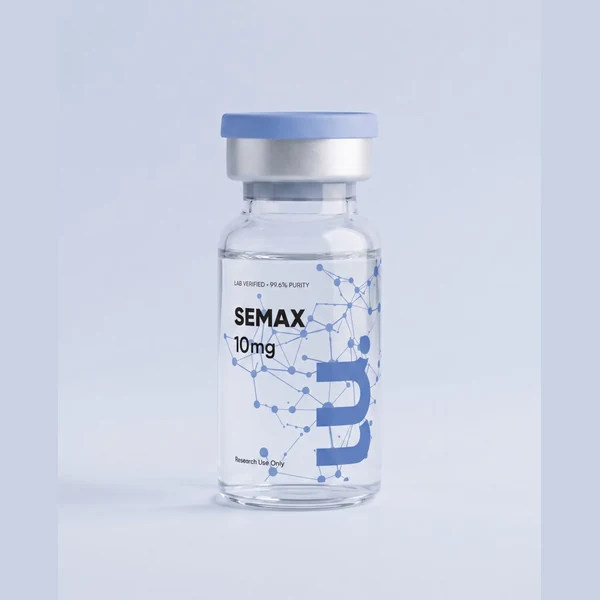
Semax 10mg
Semax
€85.00
Purity ≥99% · verified by HPLC and mass spectrometry
Order via TelegramThe report for the lot that would ship to you is issued on request, before payment.
Tracked shipping to the United Kingdom, Ireland and the rest of Europe · handling 0–1 days · 14-day right of withdrawal
Technical specification
| CAS number | 80714-61-0 |
|---|---|
| Sequence | Met-Glu-His-Phe-Pro-Gly-Pro |
| Molecular formula | C37H51N9O10S |
| Molecular weight | 813.9 g/mol |
| Purity | ≥99% |
| Presentation | Lyophilised powder, single-use glass vial |
| Intended use | Laboratory research use only |
Semax is a synthetic heptapeptide (Met-Glu-His-Phe-Pro-Gly-Pro) derived from a fragment of adrenocorticotropic hormone, ACTH(4-10), with a proline-glycine-proline sequence appended to extend its stability. It was originally developed in Russia in the 1980s as a nootropic and neuroprotective research compound and remains one of the most widely studied peptides in the ACTH-analogue class, forming the editorial focus of this catalogue.
The preclinical and clinical literature on Semax spans rodent models of cerebral ischaemia, cognitive-performance assays and studies of neurotrophic factor expression. Because Semax lacks the corticotropic activity of native ACTH, researchers have used it as a tool to dissociate the neuroactive properties of the ACTH(4-10) fragment from adrenal-stimulating effects, an approach documented across several decades of Russian and international pharmacology literature.
Research applications
- Rodent models of cerebral ischaemia and neuroprotection
- Cognitive-performance assays (spatial memory, attention tasks)
- Neurotrophic factor expression studies (BDNF pathway research)
- ACTH(4-10) structure-activity relationship research
What the literature reports on Semax
Semax belongs to a family of ACTH(4-10) analogues studied since the 1980s for activity in the central nervous system that is independent of the adrenal-stimulating properties of the parent hormone. Because the native ACTH(4-10) fragment is rapidly degraded by peptidases, the Pro-Gly-Pro extension was added specifically to improve metabolic stability in animal models, a modification that recurs throughout the published pharmacology of this peptide class.
Neurotrophic factor research
A substantial portion of the Semax literature concerns brain-derived neurotrophic factor (BDNF). Rodent studies have reported increased BDNF gene expression in hippocampal tissue following administration, and this line of research is frequently cited as a candidate mechanism for the neuroprotective and cognitive effects observed in other assays. Related work has examined nerve growth factor (NGF) expression and downstream signalling pathways, including changes reported in tyrosine kinase receptor activity in rodent brain tissue.
Cerebral ischaemia models
Rodent models of focal cerebral ischaemia are a recurring theme in the Semax literature, with studies reporting reduced infarct volume and altered markers of oxidative stress and inflammation following administration in the peri-infarct period. This body of work has informed exploratory clinical research into acute stroke settings within Russian medical literature, although such clinical use is outside the scope of research-grade material sold for laboratory purposes.
Cognitive and behavioural assays
Behavioural pharmacology studies in rodents have used standard cognitive assays, including passive avoidance and spatial memory tasks, to characterise Semax activity. Findings across this literature are generally interpreted in the context of the peptide's effects on neurotrophic signalling rather than as a direct pharmacological action comparable to classical stimulants.
Respiratory and hypoxia research
A separate strand of the Semax literature has examined its activity in models of hypoxic and respiratory stress, with studies in animal models reporting changes in markers of tissue oxygenation tolerance under experimentally induced hypoxic conditions. This research is generally discussed alongside the broader neuroprotective literature, given the overlap between hypoxia tolerance and ischaemic injury pathways.
Structural analogue research
Because Semax has spawned a small family of related ACTH(4-10) analogues, researchers have compared its activity against modified variants that alter its stability and receptor-interaction profile, most notably N-Acetyl Semax Amidate. This comparative structure-activity research examines how N-terminal acetylation and C-terminal amidation change the pharmacokinetic and pharmacodynamic profile relative to the parent Semax sequence, a comparison detailed in the Semax vs N-Acetyl Semax Amidate guide.
Analytical and stability chemistry research
Given its use as a research reagent, a body of analytical chemistry literature has characterised Semax's stability under different storage and reconstitution conditions, examining degradation pathways relevant to peptide handling in laboratory settings. This analytical research directly informs the reconstitution and storage practices recommended for laboratory use of the compound.
Semax nasal spray: what the cited studies used
Intranasal administration is the route used throughout the Semax literature cited on this page and on the Semax research overview — including the rat biodistribution study tracking radiolabelled Semax after intranasal dosing, and the non-randomised clinical study following intranasal Semax courses after ischaemic stroke. This listing supplies lyophilised Semax powder for laboratory reconstitution, not an assembled spray device; researchers replicating an intranasal protocol prepare and administer the solution themselves under their own laboratory procedures.
For a full review of the Semax literature, citation-by-citation, see the Semax research pillar, and for a side-by-side comparison with the structurally related peptide Selank, see the Semax vs Selank guide.
Laboratory handling
Each vial of lyophilised Semax should be stored at -20°C prior to reconstitution and protected from light and humidity. Standard laboratory practice for peptide reconstitution uses bacteriostatic water or sterile water for injection introduced slowly along the vial wall to avoid disrupting the lyophilised cake by direct stream impact. Once reconstituted, aliquots for research use are generally stored at 2-8°C for short-term use within the working period defined by the researcher's protocol, or frozen at -20°C for longer-term storage, with repeated freeze-thaw cycles minimised to preserve peptide integrity.
- Lyophilised powder: store at -20°C, protected from light, until reconstitution.
- Reconstitution: introduce diluent slowly along the vial wall; avoid vigorous shaking.
- Post-reconstitution: 2-8°C for short-term laboratory use; avoid repeated freeze-thaw cycles.
- Each batch ships with a certificate of analysis confirming ≥99% purity by HPLC and identity by mass spectrometry.
For a full protocol reference, see the peptide reconstitution and storage guide. This product is intended for laboratory research use only.
References
- Dolotov OV, Karpenko EA, Inozemtseva LS, Seredenina TS, Levitskaya NG, Rozyczka J, Dubynina EV, Novosadova EV, Andreeva LA, Alfeeva LY, Kamensky AA, Grivennikov IA, Myasoedov NF, Engele J. “Semax, an analog of ACTH(4-10) with cognitive effects, regulates BDNF and trkB expression in the rat hippocampus”. Brain Research, 2006. PubMed / DOI
- Dolotov OV, Karpenko EA, Seredenina TS, Inozemtseva LS, Levitskaya NG, Zolotarev YA, Kamensky AA, Grivennikov IA, Engele J, Myasoedov NF. “Semax, an analogue of adrenocorticotropin (4-10), binds specifically and increases levels of brain-derived neurotrophic factor protein in rat basal forebrain”. Journal of Neurochemistry, 2006. PubMed / DOI
- Eremin KO, Kudrin VS, Saransaari P, Oja SS, Grivennikov IA, Myasoedov NF, Rayevsky KS. “Semax, an ACTH(4-10) analogue with nootropic properties, activates dopaminergic and serotoninergic brain systems in rodents”. Neurochemical Research, 2005. PubMed / DOI
- Stavchansky VV, Yuzhakov VV, Botsina AY, Skvortsova VI, Bondurko LN, Tsyganova MG, Limborska SA, Myasoedov NF, Dergunova LV. “The effect of Semax and its C-end peptide PGP on the morphology and proliferative activity of rat brain cells during experimental ischemia: a pilot study”. Journal of Molecular Neuroscience, 2011. PubMed / DOI
- Gusev EI, Martynov MYu, Kostenko EV, Petrova LV, Bobyreva SN. “The efficacy of semax in the treatment of patients at different stages of ischemic stroke”. Zhurnal Nevrologii i Psikhiatrii imeni S.S. Korsakova, 2018. PubMed / DOI
Related compounds
-
 FOCUS
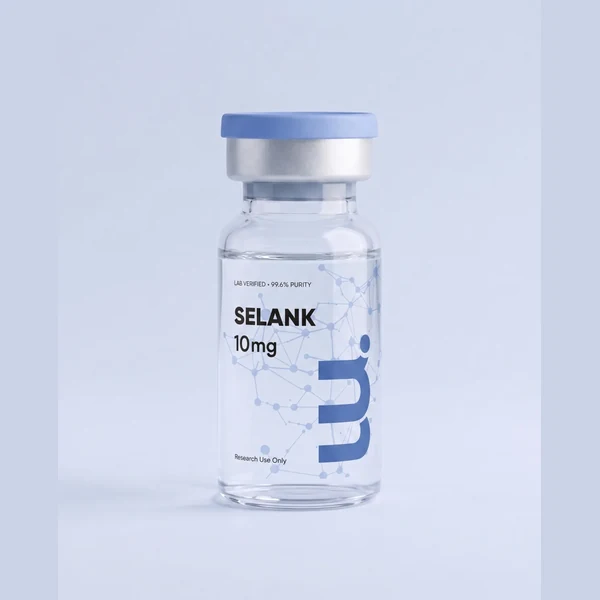
Selank 10mg
Synthetic tuftsin analogue investigated in animal studies of anxiety-related behaviour and immune modulation.
€85.00
FOCUS
Selank 10mg
Synthetic tuftsin analogue investigated in animal studies of anxiety-related behaviour and immune modulation.
€85.00
-
 GLOW
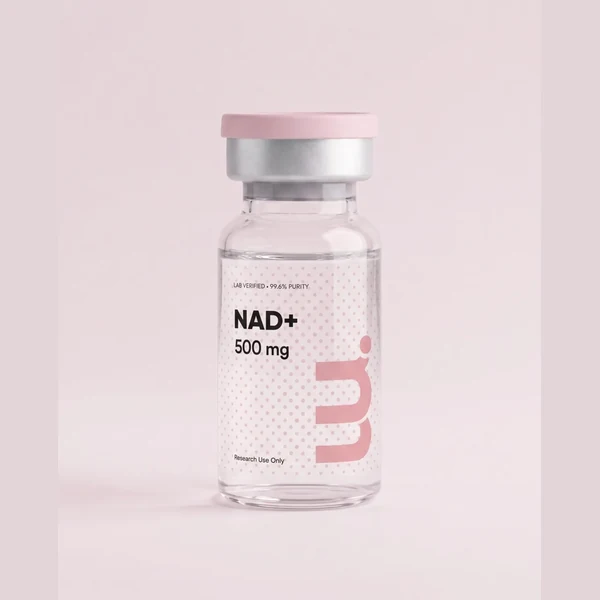
NAD+ 500mg
Coenzyme central to cellular energy metabolism, studied in research on mitochondrial function and cellular ageing.
€179.00
GLOW
NAD+ 500mg
Coenzyme central to cellular energy metabolism, studied in research on mitochondrial function and cellular ageing.
€179.00
-
 BUILD
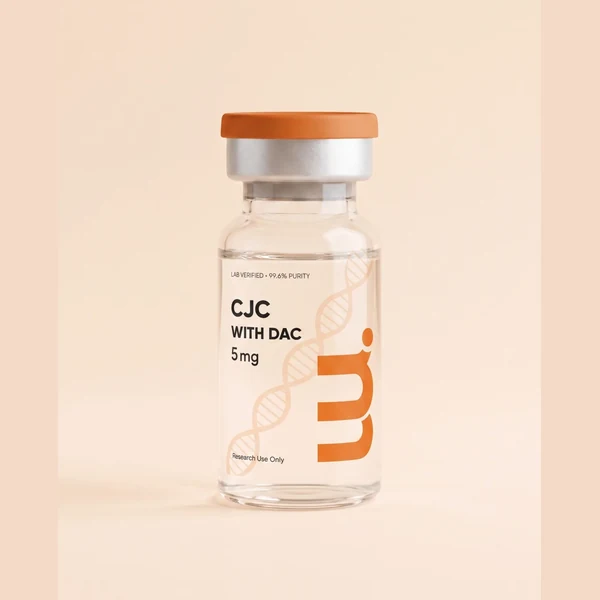
CJC-1295 5mg
Long-acting GHRH analogue (with DAC) studied in research on growth hormone secretion in animal models.
€85.00
BUILD
CJC-1295 5mg
Long-acting GHRH analogue (with DAC) studied in research on growth hormone secretion in animal models.
€85.00