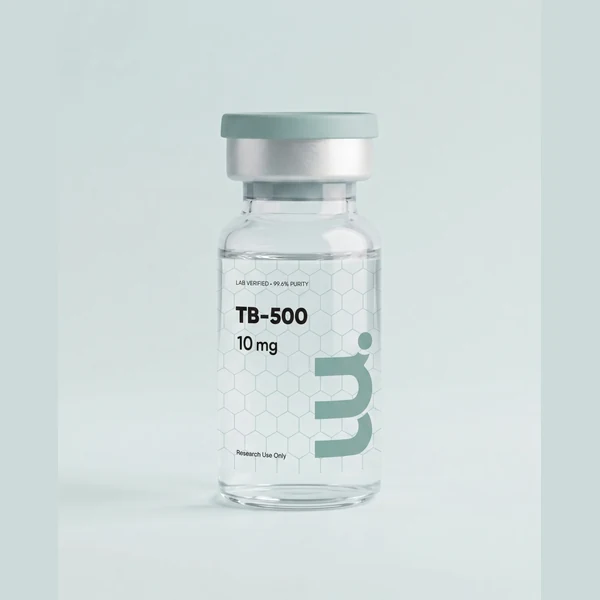
RECOVER
TB-500 10mg
TB-500
€69.00
Purity ≥99% · verified by HPLC and mass spectrometry
Order via TelegramIndependent HPLC and mass spectrometry report · 99.58% by HPLC · lot PQ7MWD.
Tracked shipping to the United Kingdom, Ireland and the rest of Europe · handling 0–1 days · 14-day right of withdrawal
Technical specification
| CAS number | 77591-33-4 |
|---|---|
| Sequence | Ac-Ser-Asp-Lys-Pro-Asp-Met-Ala-Glu-Ile-Glu-Lys-Phe-Asp-Lys-Ser-Lys-Leu-Lys-Lys-Thr-Glu-Thr-Gln-Glu-Lys-Asn-Pro-Leu-Pro-Ser-Lys-Glu-Thr-Ile-Glu-Gln-Glu-Lys-Gln-Ala-Gly-Glu-Ser |
| Molecular formula | C212H350N56O78S |
| Molecular weight | 4963.5 g/mol |
| Purity | ≥99% |
| Presentation | Lyophilised powder, single-use glass vial |
| Intended use | Laboratory research use only |
TB-500 is the trade name most commonly used in the research-peptide market for a synthetic peptide corresponding to the sequence of thymosin beta-4 (Tβ4), a 43-amino-acid protein naturally involved in regulating actin polymerisation within cells. Researchers should note that the name "TB-500" has been used inconsistently across the literature and commercial sources — this listing corresponds to the full-length thymosin beta-4 sequence, which is the identity most commonly supplied under this name by research-peptide vendors.
The literature on thymosin beta-4 and its actin-binding domain examines roles in cell migration, wound healing and cytoskeletal regulation. Because Tβ4 is one of the most abundant actin-sequestering proteins in mammalian cells, it is studied extensively in cell-biology research on cytoskeletal dynamics and tissue repair.
Research applications
- Actin polymerisation and cytoskeletal regulation research
- Cell migration studies in wound-healing models
- Rodent models of tissue repair and injury recovery
- Angiogenesis and cell-signalling research
What the literature reports on thymosin beta-4 / TB-500
Thymosin beta-4 is a small, highly conserved protein that binds monomeric G-actin, regulating the pool of actin available for polymerisation into filaments. This core biochemical function, documented extensively in cell-biology literature, underlies its relevance to any process requiring rapid cytoskeletal remodelling, including cell migration and tissue repair.
Cell migration research
Because actin dynamics govern cell motility, in vitro studies have reported that thymosin beta-4 promotes the migration of several cell types implicated in wound healing, including endothelial cells and keratinocytes. This research has been extended to angiogenesis studies, where reported effects on endothelial cell migration are linked to new blood vessel formation in injury models.
Tissue repair models
Rodent studies have examined thymosin beta-4 administration in models of cutaneous wound healing, corneal injury and cardiac tissue injury, with research reporting effects on markers of repair and reduced fibrotic scarring in some of these models. This body of work spans multiple independent research groups and several distinct organ-injury contexts.
Naming and identity note
Researchers sourcing material under the name "TB-500" should be aware that published analytical chemistry work has, in at least one instance, identified material sold under this name as a shorter seven-residue actin-binding fragment (Ac-LKKTETQ) rather than the full 43-residue protein. This catalogue entry corresponds to the full-length thymosin beta-4 sequence; researchers requiring analytical certainty on the specific fragment length should consult the batch certificate of analysis.
Comparative tissue-repair research
Thymosin beta-4 research is frequently discussed alongside BPC-157 in the tissue-repair literature, given overlapping study endpoints in musculoskeletal and dermal injury models despite distinct proposed mechanisms of action, with comparative research used to characterise the relative contribution of cytoskeletal-regulation pathways to overall repair outcomes.
Laboratory handling
TB-500 should be stored as lyophilised powder at -20°C, protected from light and moisture, until reconstitution. Reconstitution follows standard peptide practice: diluent introduced slowly along the vial wall, followed by gentle mixing.
- Lyophilised powder: store at -20°C, protected from light, until reconstitution.
- Reconstitution: introduce diluent slowly along the vial wall; mix gently, do not shake.
- Post-reconstitution: 2-8°C for short-term laboratory use; avoid repeated freeze-thaw cycles.
- Each batch ships with a certificate of analysis confirming ≥99% purity by HPLC and identity by mass spectrometry.
See the peptide reconstitution and storage guide for a full protocol reference. This product is intended for laboratory research use only.
References
- Malinda KM, Sidhu GS, Mani H, et al. “Thymosin beta4 accelerates wound healing”. Journal of Investigative Dermatology, 1999. PubMed / DOI
- Bock-Marquette I, Saxena A, White MD, et al. “Thymosin beta4 activates integrin-linked kinase and promotes cardiac cell migration, survival and cardiac repair”. Nature, 2004. PubMed / DOI
- Philp D, Goldstein AL, Kleinman HK. “Thymosin beta4 promotes angiogenesis, wound healing, and hair follicle development”. Mechanisms of Ageing and Development, 2004. PubMed / DOI
- Sosne G, Dunn SP, Kim C. “Thymosin β4 significantly improves signs and symptoms of severe dry eye in a phase 2 randomized trial”. Cornea, 2015. PubMed / DOI
Related compounds
-
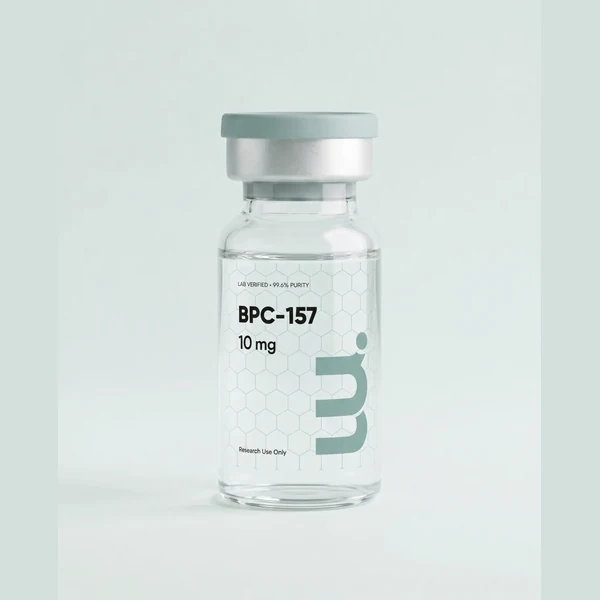 RECOVER
BPC-157 10mg
Synthetic pentadecapeptide fragment studied in animal models of tissue repair and gastrointestinal physiology.
€95.00
RECOVER
BPC-157 10mg
Synthetic pentadecapeptide fragment studied in animal models of tissue repair and gastrointestinal physiology.
€95.00
-
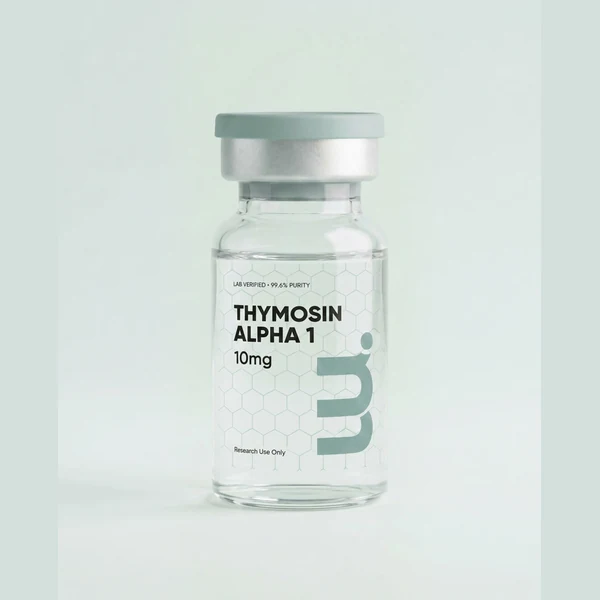 RECOVER
Thymosin Alpha-1 10mg
Immunomodulatory peptide studied in preclinical research on immune cell signalling and response.
€85.00
RECOVER
Thymosin Alpha-1 10mg
Immunomodulatory peptide studied in preclinical research on immune cell signalling and response.
€85.00
-
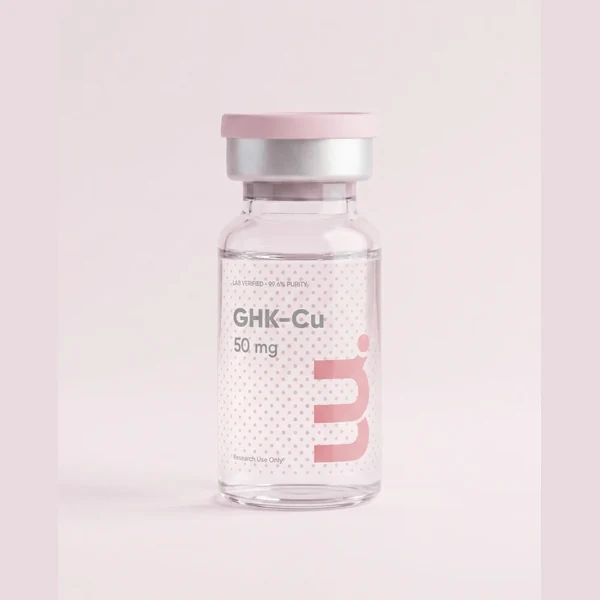 GLOW
GHK-Cu 50mg
Copper-binding tripeptide complex studied in research on dermal fibroblast and collagen biology.
€79.00
GLOW
GHK-Cu 50mg
Copper-binding tripeptide complex studied in research on dermal fibroblast and collagen biology.
€79.00