RECOVER
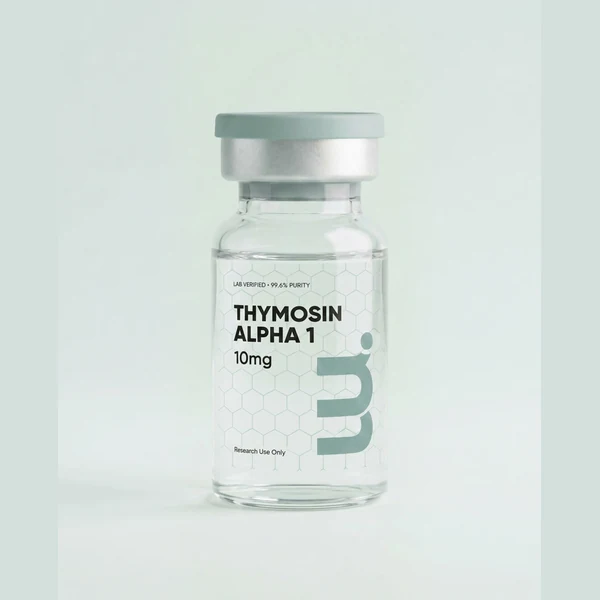
Thymosin Alpha-1 10mg
Thymosin Alpha-1
€85.00
Purity ≥99% · verified by HPLC and mass spectrometry
Order via TelegramIndependent HPLC and mass spectrometry report · 99.65% by HPLC · lot THYMA10-042026-1.
Tracked shipping to the United Kingdom, Ireland and the rest of Europe · handling 0–1 days · 14-day right of withdrawal
Technical specification
| CAS number | 62304-98-7 |
|---|---|
| Sequence | Ac-Ser-Asp-Ala-Ala-Val-Asp-Thr-Ser-Ser-Glu-Ile-Thr-Thr-Lys-Asp-Leu-Lys-Glu-Lys-Lys-Glu-Val-Val-Glu-Glu-Ala-Glu-Asn |
| Molecular formula | C129H215N33O55 |
| Molecular weight | 3108.3 g/mol |
| Purity | ≥99% |
| Presentation | Lyophilised powder, single-use glass vial |
| Intended use | Laboratory research use only |
Thymosin Alpha-1 is a synthetic 28-amino-acid, N-acetylated peptide originally isolated from thymic tissue extract and now produced synthetically for research use. It is one of the most extensively studied immunomodulatory peptides, with a research history spanning several decades and an international non-proprietary name (thymalfasin) reflecting its established position in immunology research.
The literature on Thymosin Alpha-1 covers its effects on T-cell maturation and function, cytokine signalling, and innate immune cell activity, studied across both in vitro immune cell models and animal models of immune challenge. Its role as a research tool for probing T-cell-mediated immune signalling is well documented across independent research groups.
Research applications
- T-cell maturation and differentiation research
- Cytokine signalling studies in immune cell models
- Innate immune cell activity research (dendritic cells, NK cells)
- Animal models of immune challenge and response
What the literature reports on Thymosin Alpha-1
Thymosin Alpha-1 was originally identified as a component of thymosin fraction 5, an extract of thymic tissue studied for its role in T-cell development. Its 28-residue, N-acetylated sequence has been characterised extensively, and it remains a reference compound in the study of thymic peptide hormones.
T-cell research
In vitro studies have reported that Thymosin Alpha-1 influences T-cell maturation markers and modulates cytokine production in cultured lymphocytes, with research describing effects on both helper and cytotoxic T-cell populations. This research has been extended to studies of thymic function in animal models, examining how exogenous Thymosin Alpha-1 interacts with endogenous thymic peptide signalling.
Innate immune signalling research
Beyond T-cell effects, research has examined Thymosin Alpha-1's activity on innate immune cell populations, including dendritic cells and natural killer cells, with studies reporting changes in activation markers and cytokine secretion profiles following exposure in cell culture models.
Immune challenge models
Animal studies have used models of immune challenge, including infection and vaccination-response paradigms, to study how Thymosin Alpha-1 administration modulates the resulting immune response, with reported effects on markers of immune cell activation and cytokine profiles across several independent research programmes.
Comparative recovery-peptide research
Within this catalogue's RECOVER category, Thymosin Alpha-1 is studied for its immune-signalling profile as distinct from the tissue-repair mechanisms examined for BPC-157 and TB-500, and researchers designing recovery-focused protocols sometimes study these compounds in parallel to separate immune-modulatory from structural tissue-repair endpoints.
Toll-like receptor signalling research
Mechanistic research has examined Thymosin Alpha-1's interaction with toll-like receptor signalling pathways in immune cells, reporting modulation of downstream transcription factor activity implicated in innate immune cell activation, a research thread that has informed proposed mechanistic models for its broader immunomodulatory profile.
Laboratory handling
Thymosin Alpha-1 should be stored as lyophilised powder at -20°C, protected from light and moisture, until reconstitution. Reconstitution follows standard peptide practice: diluent introduced slowly along the vial wall, followed by gentle mixing.
- Lyophilised powder: store at -20°C, protected from light, until reconstitution.
- Reconstitution: introduce diluent slowly along the vial wall; mix gently, do not shake.
- Post-reconstitution: 2-8°C for short-term laboratory use; avoid repeated freeze-thaw cycles.
- Each batch ships with a certificate of analysis confirming ≥99% purity by HPLC and identity by mass spectrometry.
See the peptide reconstitution and storage guide for a full protocol reference. This product is intended for laboratory research use only.
References
- Goldstein AL, Low TL, McAdoo M, et al. “Thymosin alpha1: isolation and sequence analysis of an immunologically active thymic polypeptide”. Proceedings of the National Academy of Sciences U.S.A., 1977. PubMed / DOI
- Andreone P, Cursaro C, Gramenzi A, et al. “A double-blind, placebo-controlled, pilot trial of thymosin alpha 1 for the treatment of chronic hepatitis C”. Liver, 1996. PubMed / DOI
- Mutchnick MG, Lindsay KL, Schiff ER, et al. “Thymosin alpha1 treatment of chronic hepatitis B: results of a phase III multicentre, randomized, double-blind and placebo-controlled study”. Journal of Viral Hepatitis, 1999. PubMed / DOI
- Wu J, Zhou L, Liu J, et al. “The efficacy of thymosin alpha 1 for severe sepsis (ETASS): a multicenter, single-blind, randomized and controlled trial”. Critical Care, 2013. PubMed / DOI
Related compounds
-
 RECOVER
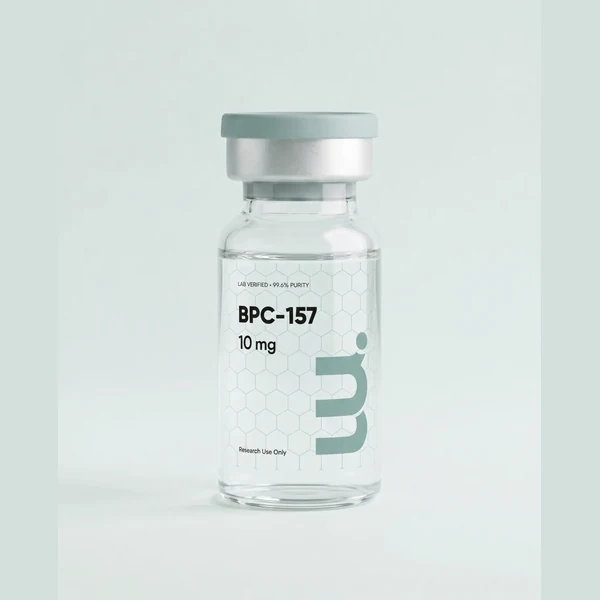
BPC-157 10mg
Synthetic pentadecapeptide fragment studied in animal models of tissue repair and gastrointestinal physiology.
€95.00
RECOVER
BPC-157 10mg
Synthetic pentadecapeptide fragment studied in animal models of tissue repair and gastrointestinal physiology.
€95.00
-
 RECOVER
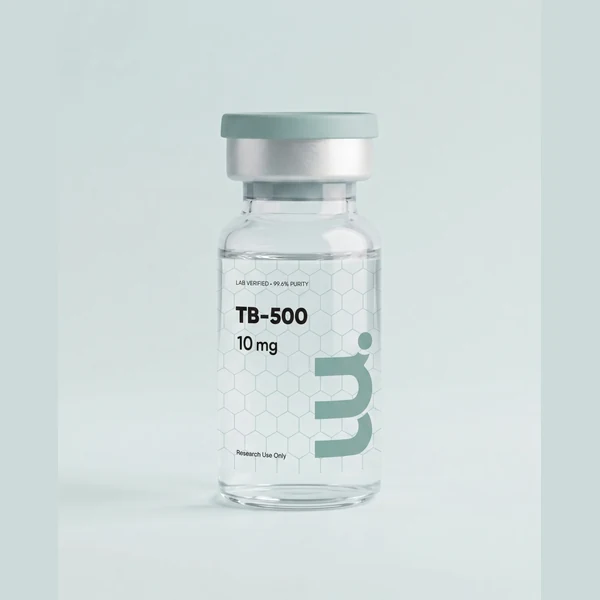
TB-500 10mg
Synthetic thymosin beta-4 sequence studied in preclinical models of tissue repair and cell migration.
€69.00
RECOVER
TB-500 10mg
Synthetic thymosin beta-4 sequence studied in preclinical models of tissue repair and cell migration.
€69.00
-
 FOCUS
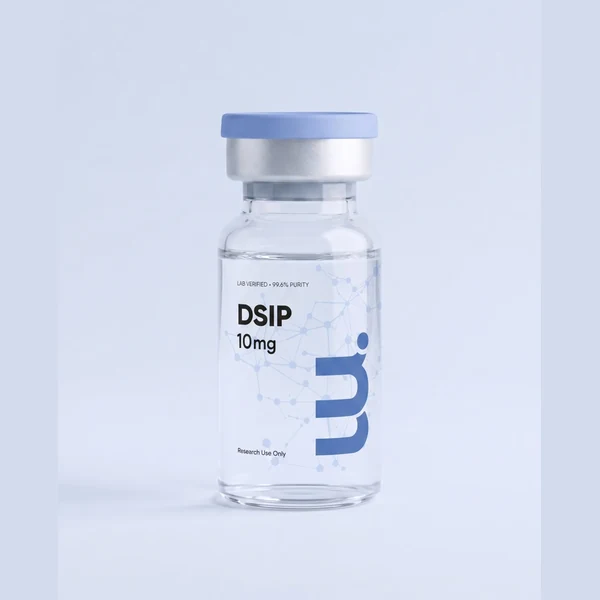
DSIP 10mg
Nonapeptide first isolated for its role in sleep research, studied in animal neurophysiology models.
€75.00
FOCUS
DSIP 10mg
Nonapeptide first isolated for its role in sleep research, studied in animal neurophysiology models.
€75.00