BUILD
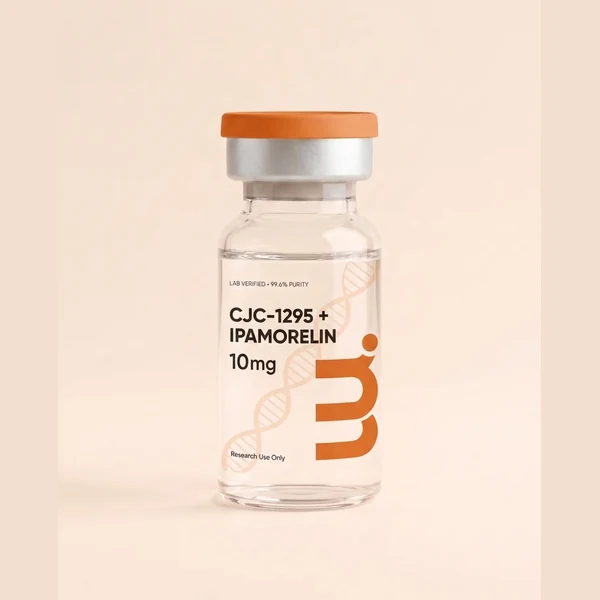
CJC-1295 + Ipamorelin Blend 10mg
CJC-1295 + Ipamorelin
€85.00
Purity ≥99% · verified by HPLC and mass spectrometry
Order via TelegramIndependent HPLC and mass spectrometry report · 99.96% by HPLC · lot 78WS7U.
Tracked shipping to the United Kingdom, Ireland and the rest of Europe · handling 0–1 days · 14-day right of withdrawal
Technical specification
| CAS number | |
|---|---|
| Sequence | |
| Molecular formula | |
| Molecular weight | |
| Purity | ≥99% |
| Presentation | Lyophilised powder, single-use glass vial |
| Intended use | Laboratory research use only |
This listing combines two growth-hormone-axis peptides in a single vial: CJC-1295, a GHRH receptor analogue, and Ipamorelin, a selective ghrelin-receptor (GHS-R) agonist. Because the two peptides act on distinct receptors within the growth-hormone-releasing pathway, they are frequently studied together as a combination tool for examining synergistic or additive effects on growth hormone secretion in animal research models.
The rationale documented in the literature for combining a GHRH-receptor agonist with a ghrelin-receptor agonist rests on the fact that these two receptor systems act through parallel intracellular signalling cascades in pituitary somatotroph cells. Research groups have used co-administration protocols to study whether activating both pathways simultaneously produces effects on growth hormone pulse amplitude beyond what either compound achieves independently.
Research applications
- Combined GHRH-receptor and ghrelin-receptor signalling research
- Growth hormone pulse amplitude studies in animal models
- Pituitary somatotroph cell signalling research
- Comparative research against single-agonist GHRH or GHS-R protocols
What the literature reports on the CJC-1295 + Ipamorelin combination
CJC-1295 acts at the GHRH receptor, while Ipamorelin acts at the ghrelin receptor (GHS-R1a); both are expressed on pituitary somatotroph cells and converge on growth hormone release through distinct intracellular second-messenger pathways, GHRH signalling primarily through cAMP/PKA and ghrelin-receptor signalling through the phospholipase C/protein kinase C pathway. This dual-pathway architecture is the basis documented in the endocrinology literature for studying combination protocols.
Synergy research
Endocrinology research examining combined GHRH and GHS-R agonism has reported that simultaneous activation of both pathways can produce growth hormone release exceeding the additive sum of either agonist alone in some experimental models, an effect researchers have attributed to convergent signal amplification at the somatotroph cell level. This synergy research is a primary reason the two peptide classes are studied together rather than exclusively in isolation.
Selectivity research
Ipamorelin's value as a research tool partly stems from its receptor selectivity: unlike earlier growth-hormone secretagogues, studies report that Ipamorelin does not meaningfully activate cortisol or prolactin release at the ghrelin receptor, allowing researchers to isolate growth-hormone-axis effects from broader hypothalamic-pituitary activation in combination studies with GHRH analogues such as CJC-1295.
Individual compound profiles
For the pharmacology of each component compound individually, including their distinct CAS numbers, sequences and half-life profiles, see the dedicated CJC-1295 and Ipamorelin product listings.
Experimental design research
Researchers designing combination protocols have reported that timing of co-administration relative to endogenous growth hormone pulsatility is a relevant variable in the published literature, with some study designs synchronising administration to baseline low-secretion periods to maximise the observable signal-to-noise ratio in growth hormone measurement assays. This methodological consideration is documented across multiple independent combination-protocol studies.
Laboratory handling
This blend should be stored as lyophilised powder at -20°C, protected from light and moisture, until reconstitution. As with the individual peptides, reconstitution should introduce diluent slowly along the vial wall, followed by gentle mixing rather than shaking.
- Lyophilised powder: store at -20°C, protected from light, until reconstitution.
- Reconstitution: introduce diluent slowly along the vial wall; mix gently, do not shake.
- Post-reconstitution: 2-8°C for short-term laboratory use; avoid repeated freeze-thaw cycles.
- Each batch ships with a certificate of analysis confirming ≥99% purity by HPLC and identity by mass spectrometry.
See the peptide reconstitution and storage guide for a full protocol reference. This product is intended for laboratory research use only.
Related compounds
-
 BUILD
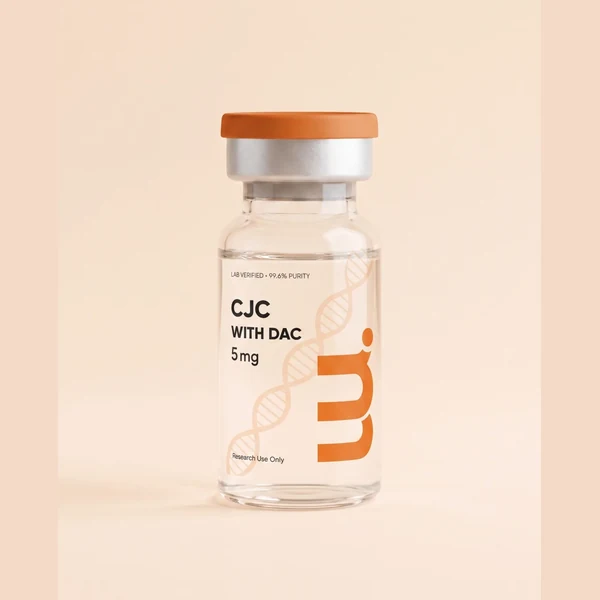
CJC-1295 5mg
Long-acting GHRH analogue (with DAC) studied in research on growth hormone secretion in animal models.
€85.00
BUILD
CJC-1295 5mg
Long-acting GHRH analogue (with DAC) studied in research on growth hormone secretion in animal models.
€85.00
-
 BUILD
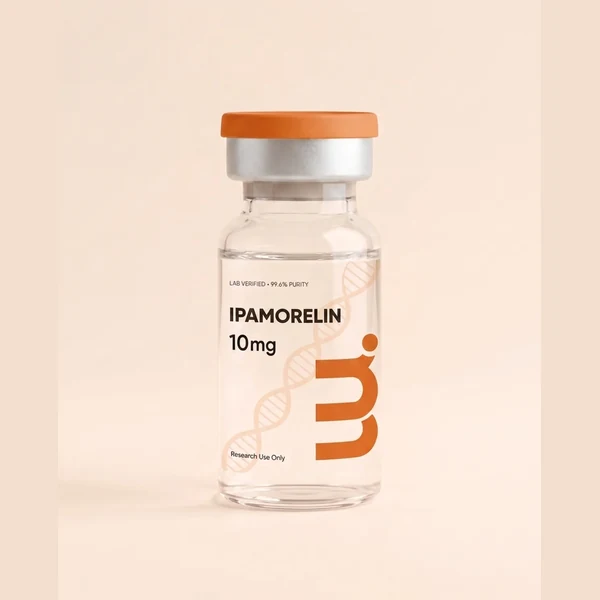
Ipamorelin 10mg
Selective ghrelin-receptor agonist peptide studied in research on growth hormone secretion pathways.
€79.00
BUILD
Ipamorelin 10mg
Selective ghrelin-receptor agonist peptide studied in research on growth hormone secretion pathways.
€79.00
-
 BUILD
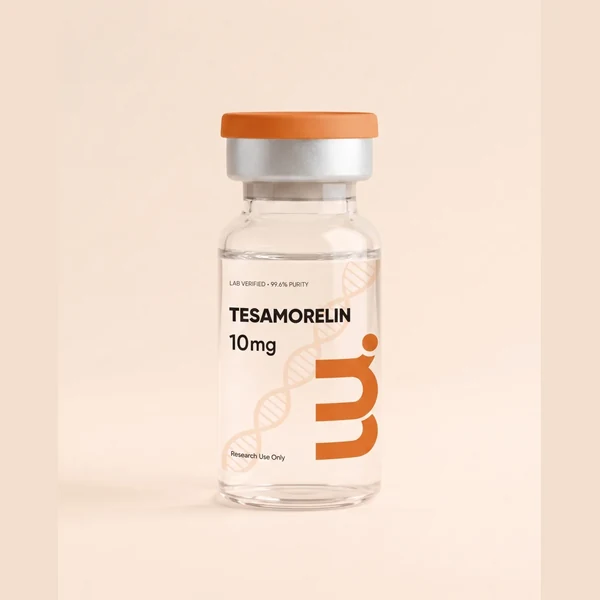
Tesamorelin 10mg
Stabilised GHRH(1-44) analogue studied in research on growth hormone axis regulation in clinical and preclinical models.
€139.00
BUILD
Tesamorelin 10mg
Stabilised GHRH(1-44) analogue studied in research on growth hormone axis regulation in clinical and preclinical models.
€139.00