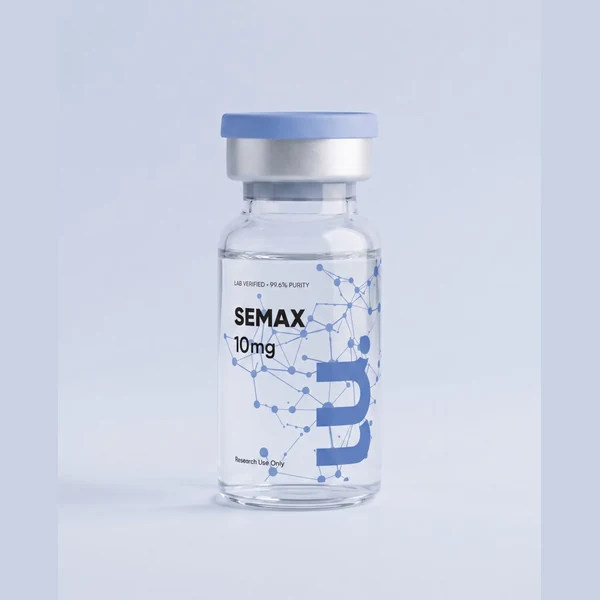
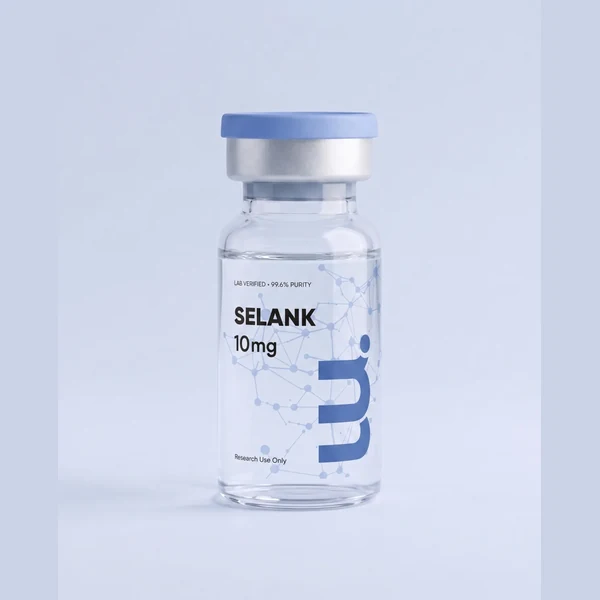
Semax and Selank are frequently discussed together because they share an origin, a design principle and a research tradition, yet the two peptides are built from different parent hormones and their published literatures cover largely different endpoints. This guide sets out the structural relationship between them and summarises what each body of research actually reports, as a companion to the fuller Semax research overview. It is intended for researchers deciding which peptide is the appropriate subject for a given protocol, not as a claim that one is superior to the other; they are studied for different things, and the published record for each should be read on its own terms rather than as competing evidence for a shared effect.
Shared origin, different parent sequences
Both peptides were developed within the same Russian research programme, associated with Ivan Ashmarin and Nikolay Myasoedov at the Institute of Molecular Genetics, and both use the same stabilisation strategy: a short, naturally occurring Pro-Gly-Pro tripeptide fused to the C-terminus of a biologically active core fragment, intended to slow enzymatic degradation relative to the unmodified fragment. Where the two diverge is in that core fragment. Semax is built from ACTH(4-7) (Met-Glu-His-Phe), the corticotropin-derived sequence reported to carry central nervous system activity independent of ACTH's hormonal, corticotropic effect. Selank is built from a fragment of tuftsin (Thr-Lys-Pro-Arg), a naturally occurring immunomodulatory tetrapeptide. The full sequences are Met-Glu-His-Phe-Pro-Gly-Pro for Semax and Thr-Lys-Pro-Arg-Pro-Gly-Pro for Selank.
| Semax | Selank | |
|---|---|---|
| Sequence | Met-Glu-His-Phe-Pro-Gly-Pro | Thr-Lys-Pro-Arg-Pro-Gly-Pro |
| Parent peptide | ACTH(4-10) | Tuftsin |
| CAS number | 80714-61-0 | 129954-34-3 |
| Molecular formula | C37H51N9O10S | C33H57N11O9 |
| Core literature themes | BDNF/TrkB signalling, monoaminergic activity, cerebral-ischaemia models | Anxiolytic-type behavioural endpoints, GABAergic gene expression |
The shared Pro-Gly-Pro extension is the more consequential design feature for a researcher planning a protocol around either molecule, because it is what the degradation literature identifies as slowing enzymatic breakdown relative to each peptide's unmodified parent fragment. Neither peptide's C-terminal chemistry differs from the other in this respect; the two extensions are identical, which is part of why they are usually discussed as a matched pair rather than as unrelated compounds that happen to share a research lineage.
What the Semax literature reports
The Semax evidence base centres on neurotrophin signalling and monoamine activity. Dolotov and colleagues reported increased hippocampal BDNF protein and mRNA, together with enhanced TrkB receptor activity, in rats given intranasal Semax (Dolotov et al., 2006). Separately, Eremin and colleagues reported that Semax raised striatal serotonin turnover and potentiated dopamine release evoked by amphetamine challenge in rodents (Eremin et al., 2005). A fuller account of this literature, including the Russian clinical work in ischaemic stroke, is in the Semax research overview and on the Semax 10mg product page.
What the Selank literature reports
The Selank evidence base is more heavily weighted toward anxiolytic-type behavioural endpoints. A Russian comparative clinical study in patients with generalised anxiety disorder and neurasthenia reported anxiolytic effects broadly comparable to a reference benzodiazepine, alongside reported antiasthenic and psychostimulant effects (Zozulia et al., 2008). In a rodent model of unpredictable chronic mild stress, combining Selank with diazepam was reported to reduce anxiety-related behaviour more than either substance alone (Kasian et al., 2017, Behavioural Neurology). A hippocampal BDNF study broadly parallel in design to the Semax work described intranasal Selank altering BDNF mRNA and protein levels in rats within hours of dosing (Inozemtseva et al., 2008, Doklady Biological Sciences). Full details are on the Selank 10mg product page.
Administration routes reported in the literature
The rodent literature for both peptides is predominantly built on intranasal and intraperitoneal administration, reflecting the routes used in the Russian pharmacology laboratories where most of this research originated; the human clinical studies for both compounds, by contrast, used intranasal dosing in a clinical-trial setting. This is a description of study design, not guidance for use outside a research protocol: none of the figures reported in these papers are a specification for how a reader should handle either substance, and SemaxBuy does not provide dosing guidance for human or animal administration. Researchers replicating or extending a specific paper's design should take administration route and timing directly from that paper rather than from a secondary summary, including this one.
How researchers use them together
Because the two peptides share a stabilisation chemistry and a manufacturing lineage but target different reported endpoints, they are commonly ordered as a pair in comparative behavioural-pharmacology protocols — for example, contrasting a putative cognition/neurotrophin axis (Semax) against a putative anxiolytic axis (Selank) within the same experimental design. Researchers should note that most of the underlying human clinical literature for both peptides originates from Russian-language, Russia-based studies that were not always placebo-controlled by contemporary international standards, and should read the primary papers before drawing conclusions about either compound's mechanism. For guidance on handling either peptide once reconstituted, see Peptide reconstitution and storage in the laboratory, and for sourcing and verification practice see How to source research-grade Semax in Europe. Semax and Selank sold by SemaxBuy are supplied for research use only.
Common points of confusion
Three mix-ups come up repeatedly when researchers first encounter this pair of peptides. The first is assuming that because Semax and Selank share a manufacturing lineage and a C-terminal motif, findings from one compound's literature can be extrapolated to the other; the parent fragments, and therefore the receptor systems each peptide is reported to engage, are different, and the published evidence for each stands independently. The second is conflating Semax with N-Acetyl Semax Amidate, a separately modified analogue discussed in its own guide, N-Acetyl Semax Amidate, which has a much smaller independent literature than either Semax or Selank. The third is treating the Russian clinical literature for either peptide as equivalent in design to a Western placebo-controlled randomised trial; several of the human studies cited for both compounds predate, or simply do not follow, that trial-design standard, which is a limitation researchers should carry into how they weight that evidence.
Purity verification applies equally to both
Because Semax and Selank are chemically similar short peptides with comparable stability profiles, the same purity-verification logic applies to sourcing either one: a batch-specific certificate of analysis reporting HPLC purity and mass-spectrometry-confirmed identity is the minimum documentation a laboratory should expect. SemaxBuy lists both peptides at ≥99% purity by HPLC, verified per batch. The full sourcing checklist, written primarily around Semax but equally applicable to Selank, is set out in How to source research-grade Semax in Europe.
Choosing a starting point for a new protocol
Researchers new to this peptide family sometimes ask which of the two to order first. The honest answer is that the choice should follow the research question, not the other way around. A protocol built around neurotrophin signalling, monoaminergic activity or a cerebral-ischaemia model has its citable precedent in the Semax literature; a protocol built around anxiety-related behavioural endpoints or GABAergic gene expression has its citable precedent in the Selank literature. Where a design genuinely calls for both — for instance, a comparative study contrasting the two reported behavioural axes — ordering the matched pair from a single batch-verified source keeps at least the manufacturing and purity variables constant across arms, leaving the biological comparison as the only deliberately varied factor.
Whichever peptide a protocol calls for, the primary literature summarised above and linked throughout this page remains the appropriate reference point, not this comparison guide itself. This page exists to help a researcher orient between the two before reading further, not to replace the papers it cites.