RECOVER
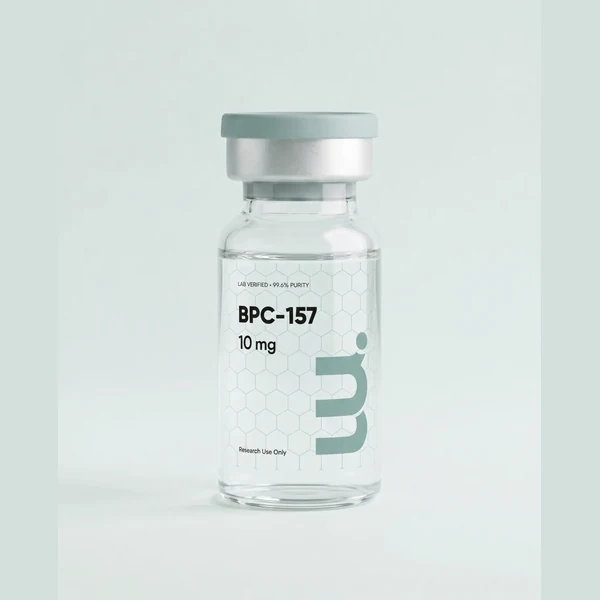
BPC-157 10mg
BPC-157
€95.00
Purity ≥99% · verified by HPLC and mass spectrometry
Order via TelegramIndependent HPLC and mass spectrometry report · 99.51% by HPLC · lot 2FRBRG.
Tracked shipping to the United Kingdom, Ireland and the rest of Europe · handling 0–1 days · 14-day right of withdrawal
Technical specification
| CAS number | 137525-51-0 |
|---|---|
| Sequence | Gly-Glu-Pro-Pro-Pro-Gly-Lys-Pro-Ala-Asp-Asp-Ala-Gly-Leu-Val |
| Molecular formula | C62H98N16O22 |
| Molecular weight | 1419.5 g/mol |
| Purity | ≥99% |
| Presentation | Lyophilised powder, single-use glass vial |
| Intended use | Laboratory research use only |
BPC-157 is a synthetic pentadecapeptide (Gly-Glu-Pro-Pro-Pro-Gly-Lys-Pro-Ala-Asp-Asp-Ala-Gly-Leu-Val) corresponding to a partial sequence of a protein isolated from human gastric juice. It is studied as a stable, synthetic fragment rather than being extracted from biological material, and it has become one of the most widely researched peptides in the tissue-repair literature.
The published research on BPC-157 spans rodent models of tendon, ligament and gut-lining injury, alongside studies of angiogenesis and cytoprotective signalling pathways. It is frequently discussed in the context of gastrointestinal research given its origin in gastric protective compounds, and separately in musculoskeletal injury models examining tissue-repair timelines.
Research applications
- Rodent models of tendon and ligament injury repair
- Gastrointestinal mucosal protection and healing research
- Angiogenesis and vascular signalling studies
- Cytoprotective pathway research in animal models
What the literature reports on BPC-157
BPC-157 derives its designation from Body Protection Compound, reflecting its origin as a fragment of a gastric-protective protein. As a synthetic 15-residue peptide, it is studied as a stable research tool rather than a naturally occurring isolate, and its pharmacology has been characterised primarily in rodent injury models.
Tissue repair research
A substantial portion of the BPC-157 literature examines its effects in rodent models of tendon, ligament and muscle injury, with studies reporting accelerated markers of healing and altered expression of growth factors implicated in tissue repair, including vascular endothelial growth factor (VEGF) signalling.
Gastrointestinal research
Reflecting its origin in gastric-protective research, BPC-157 has been studied in rodent models of gastrointestinal mucosal injury, with reported effects on healing markers in models of gastric ulceration and inflammatory bowel injury. This research thread connects BPC-157 to a broader literature on gut mucosal protective mechanisms.
Angiogenesis and signalling research
Multiple studies have reported that BPC-157 influences angiogenic signalling pathways, including modulation of VEGF receptor expression, and researchers have used this as a proposed mechanism connecting the peptide's reported effects across different tissue-repair models. This mechanistic research remains an active area of study across independent laboratories.
Comparative tissue-repair peptide research
BPC-157 is frequently studied alongside other tissue-repair-focused peptides such as TB-500, with combination and comparative research designs used to examine whether the two peptides, which are reported to act through different proposed mechanisms (angiogenic signalling versus actin-binding cytoskeletal regulation), produce additive effects in shared tissue-injury models.
Nervous system research
A growing body of research has extended BPC-157 study into models of peripheral nerve injury, examining markers of nerve regeneration and functional recovery following administration in rodent models, a research direction that connects BPC-157's tissue-repair pharmacology to neuroregeneration research more broadly.
Laboratory handling
BPC-157 should be stored as lyophilised powder at -20°C, protected from light and moisture, until reconstitution. Reconstitution follows standard peptide practice: diluent introduced slowly along the vial wall, followed by gentle mixing.
- Lyophilised powder: store at -20°C, protected from light, until reconstitution.
- Reconstitution: introduce diluent slowly along the vial wall; mix gently, do not shake.
- Post-reconstitution: 2-8°C for short-term laboratory use; avoid repeated freeze-thaw cycles.
- Each batch ships with a certificate of analysis confirming ≥99% purity by HPLC and identity by mass spectrometry.
See the peptide reconstitution and storage guide for a full protocol reference. This product is intended for laboratory research use only.
References
- Xue XC, Wu YJ, Gao MT, et al. “Protective effects of pentadecapeptide BPC 157 on gastric ulcer in rats”. World Journal of Gastroenterology, 2004. PubMed / DOI
- Cerovecki T, Bojanic I, Brcic L, et al. “Pentadecapeptide BPC 157 (PL 14736) improves ligament healing in the rat”. Journal of Orthopaedic Research, 2010. PubMed / DOI
- Chang CH, Tsai WC, Lin MS, et al. “The promoting effect of pentadecapeptide BPC 157 on tendon healing involves tendon outgrowth, cell survival, and cell migration”. Journal of Applied Physiology, 2011. PubMed / DOI
- Perovic D, Kolenc D, Bilic V, et al. “Stable gastric pentadecapeptide BPC 157 can improve the healing course of spinal cord injury and lead to functional recovery in rats”. Journal of Orthopaedic Surgery and Research, 2019. PubMed / DOI
Related compounds
-
 RECOVER
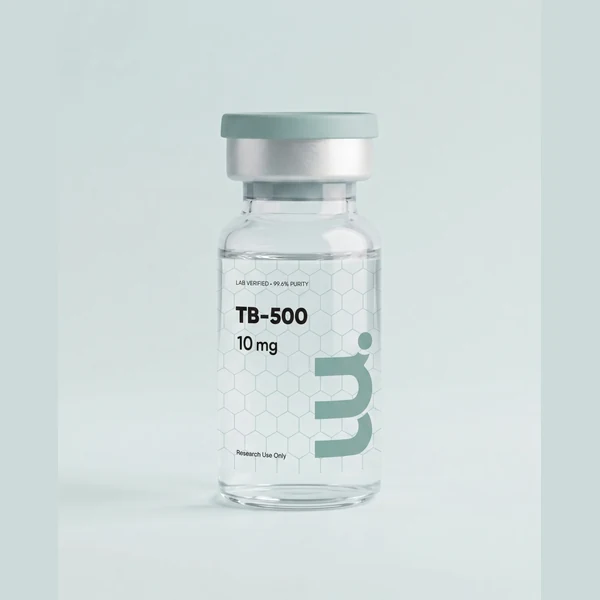
TB-500 10mg
Synthetic thymosin beta-4 sequence studied in preclinical models of tissue repair and cell migration.
€69.00
RECOVER
TB-500 10mg
Synthetic thymosin beta-4 sequence studied in preclinical models of tissue repair and cell migration.
€69.00
-
 RECOVER
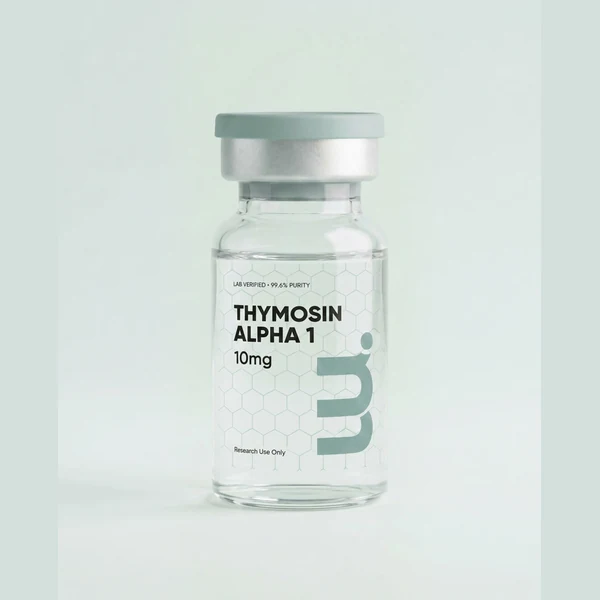
Thymosin Alpha-1 10mg
Immunomodulatory peptide studied in preclinical research on immune cell signalling and response.
€85.00
RECOVER
Thymosin Alpha-1 10mg
Immunomodulatory peptide studied in preclinical research on immune cell signalling and response.
€85.00
-
 GLOW
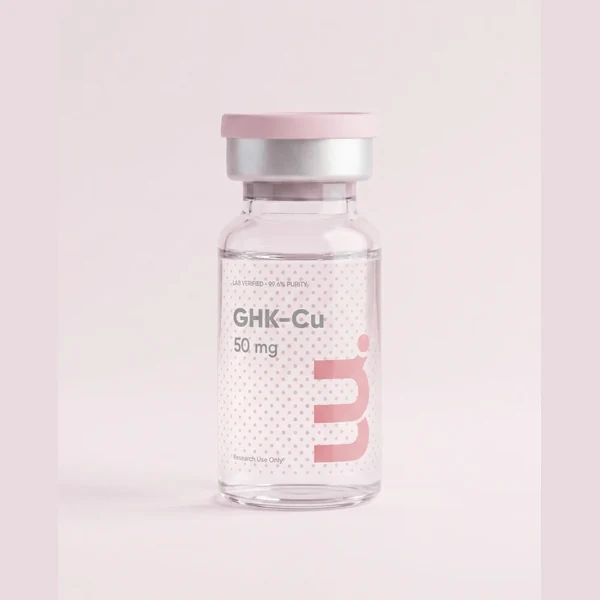
GHK-Cu 50mg
Copper-binding tripeptide complex studied in research on dermal fibroblast and collagen biology.
€79.00
GLOW
GHK-Cu 50mg
Copper-binding tripeptide complex studied in research on dermal fibroblast and collagen biology.
€79.00