BUILD
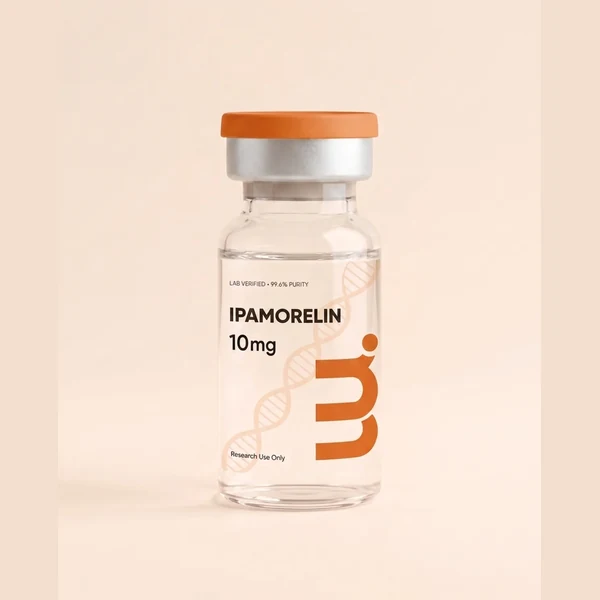
Ipamorelin 10mg
Ipamorelin
€79.00
Purity ≥99% · verified by HPLC and mass spectrometry
Order via TelegramIndependent HPLC and mass spectrometry report · 99.90% by HPLC · lot VNA7TB.
Tracked shipping to the United Kingdom, Ireland and the rest of Europe · handling 0–1 days · 14-day right of withdrawal
Technical specification
| CAS number | 170851-70-4 |
|---|---|
| Sequence | Aib-His-D-2-Nal-D-Phe-Lys-NH2 |
| Molecular formula | C38H49N9O5 |
| Molecular weight | 711.9 g/mol |
| Purity | ≥99% |
| Presentation | Lyophilised powder, single-use glass vial |
| Intended use | Laboratory research use only |
Ipamorelin is a synthetic pentapeptide (Aib-His-D-2-Nal-D-Phe-Lys-NH2) studied as a selective agonist of the ghrelin receptor (GHS-R1a). It belongs to the growth hormone secretagogue family but is distinguished in the literature by its receptor selectivity, which researchers have used to separate growth-hormone-axis signalling from the broader hypothalamic-pituitary effects reported with earlier, less selective secretagogues.
The published pharmacology of Ipamorelin covers receptor-binding characterisation, growth hormone secretion studies in animal models, and comparative research against other ghrelin-receptor agonists and GHRH analogues. Its selectivity profile has made it a frequently used tool compound in endocrinology research examining ghrelin receptor signalling in isolation.
Research applications
- Ghrelin receptor (GHS-R1a) binding and activation studies
- Growth hormone secretion research in animal models
- Receptor selectivity research versus earlier secretagogues
- Combination research alongside GHRH-receptor analogues
What the literature reports on Ipamorelin
Ipamorelin was developed as part of a research programme seeking growth hormone secretagogues with improved receptor selectivity relative to earlier compounds such as GHRP-6. Its pentapeptide structure incorporates the non-standard residue alpha-aminoisobutyric acid (Aib) and two D-amino acids, modifications documented in the original medicinal chemistry literature as conferring both receptor selectivity and resistance to enzymatic degradation.
Receptor selectivity research
Comparative pharmacology studies have reported that Ipamorelin selectively activates the ghrelin receptor without meaningfully stimulating cortisol or prolactin release, a selectivity profile distinguishing it from earlier growth hormone secretagogues. This selectivity has made Ipamorelin a preferred tool compound in research designed to isolate growth-hormone-axis signalling from broader hypothalamic-pituitary-adrenal activation.
Growth hormone secretion studies
Animal studies have reported dose-dependent growth hormone release following Ipamorelin administration, with pulsatile secretion patterns studied in the context of normal physiological growth hormone rhythms. This research has been used to characterise Ipamorelin's pharmacodynamic profile relative to endogenous ghrelin.
Combination research
Because Ipamorelin acts through the ghrelin receptor while GHRH analogues such as CJC-1295 act through a distinct receptor system, researchers frequently study the two compounds together, as covered in the CJC-1295 + Ipamorelin blend listing, to examine convergent effects on somatotroph cell signalling.
Structure-activity research
The pentapeptide design of Ipamorelin, including its non-standard Aib residue and two D-amino acid substitutions, has been studied as a case example in medicinal chemistry literature examining how minimal peptide scaffolds can achieve receptor selectivity, a research theme relevant to the broader design of ghrelin-receptor agonist compounds.
Metabolic research context
Because ghrelin receptor signalling is also implicated in appetite and energy balance research, some studies have examined secondary metabolic parameters alongside growth hormone measurements following Ipamorelin administration in animal models, extending Ipamorelin research beyond the growth-hormone axis into broader metabolic signalling literature.
Laboratory handling
Ipamorelin should be stored as lyophilised powder at -20°C, protected from light and moisture, until reconstitution. Reconstitution follows standard peptide practice: diluent introduced slowly along the vial wall, followed by gentle mixing.
- Lyophilised powder: store at -20°C, protected from light, until reconstitution.
- Reconstitution: introduce diluent slowly along the vial wall; mix gently, do not shake.
- Post-reconstitution: 2-8°C for short-term laboratory use; avoid repeated freeze-thaw cycles.
- Each batch ships with a certificate of analysis confirming ≥99% purity by HPLC and identity by mass spectrometry.
See the peptide reconstitution and storage guide for a full protocol reference. This product is intended for laboratory research use only.
References
- Raun K, Hansen BS, Johansen NL, et al. “Ipamorelin, the first selective growth hormone secretagogue”. European Journal of Endocrinology, 1998. PubMed / DOI
- Johansen PB, Nowak J, Skjaerbaek C, et al. “Ipamorelin, a new growth-hormone-releasing peptide, induces longitudinal bone growth in rats”. Growth Hormone & IGF Research, 1999. PubMed / DOI
- Ankersen M, Johansen NL, Madsen K, et al. “A new series of highly potent growth hormone-releasing peptides derived from ipamorelin”. Journal of Medicinal Chemistry, 1998. PubMed / DOI
Related compounds
-
 BUILD
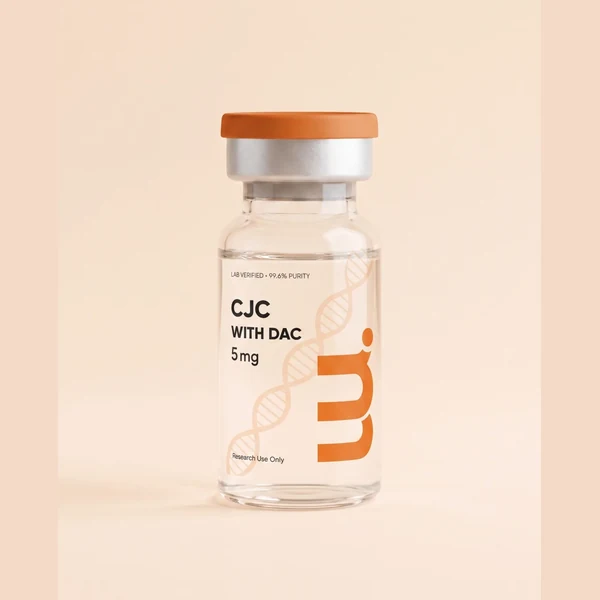
CJC-1295 5mg
Long-acting GHRH analogue (with DAC) studied in research on growth hormone secretion in animal models.
€85.00
BUILD
CJC-1295 5mg
Long-acting GHRH analogue (with DAC) studied in research on growth hormone secretion in animal models.
€85.00
-
 BUILD
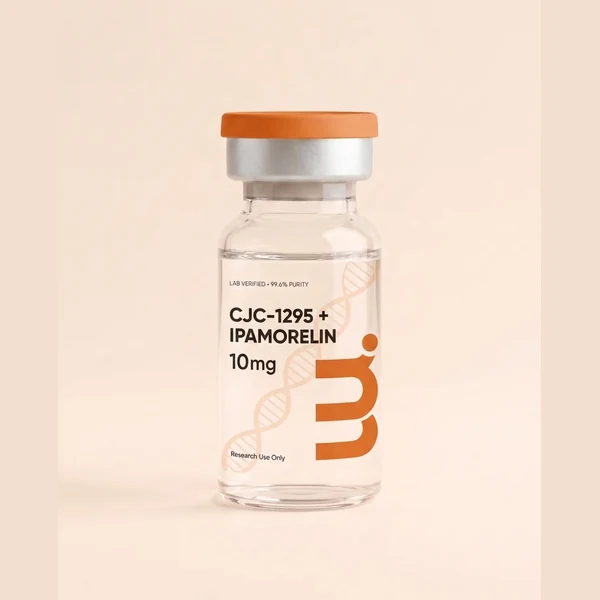
CJC-1295 + Ipamorelin Blend 10mg
Combined GHRH analogue and ghrelin-receptor agonist blend used in growth-hormone-axis research protocols.
€85.00
BUILD
CJC-1295 + Ipamorelin Blend 10mg
Combined GHRH analogue and ghrelin-receptor agonist blend used in growth-hormone-axis research protocols.
€85.00
-
 BUILD
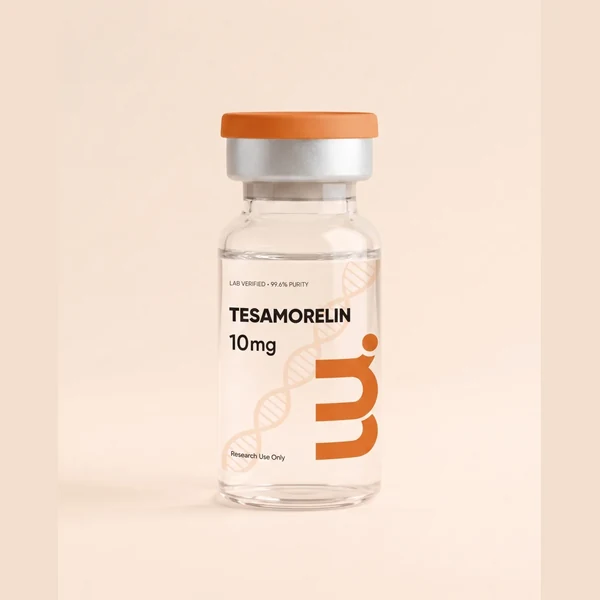
Tesamorelin 10mg
Stabilised GHRH(1-44) analogue studied in research on growth hormone axis regulation in clinical and preclinical models.
€139.00
BUILD
Tesamorelin 10mg
Stabilised GHRH(1-44) analogue studied in research on growth hormone axis regulation in clinical and preclinical models.
€139.00