LEAN
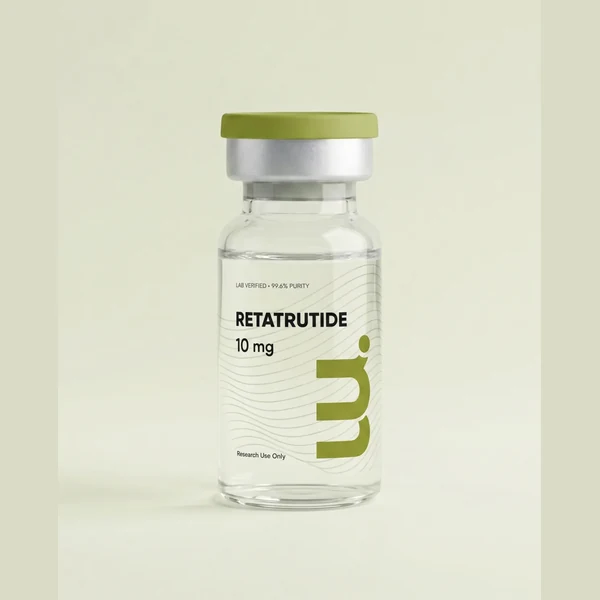
Retatrutide 10mg
Retatrutide
€209.00
Purity ≥99% · verified by HPLC and mass spectrometry
Order via TelegramIndependent HPLC and mass spectrometry report · 99.91% by HPLC · lot K3BQAA.
Tracked shipping to the United Kingdom, Ireland and the rest of Europe · handling 0–1 days · 14-day right of withdrawal
Technical specification
| CAS number | 2381089-83-2 |
|---|---|
| Sequence | |
| Molecular formula | C221H342N46O68 |
| Molecular weight | 4731.3 g/mol |
| Purity | ≥99% |
| Presentation | Lyophilised powder, single-use glass vial |
| Intended use | Laboratory research use only |
Retatrutide is a synthetic 39-amino-acid peptide engineered as a triple agonist acting at the GIP, GLP-1 and glucagon receptors. Like tirzepatide, it carries a fatty diacid moiety to extend its circulating half-life, but its receptor-engagement profile adds glucagon receptor activity, a design intended to study the additional metabolic contribution of glucagon signalling alongside the incretin pathways.
The published pharmacology literature on retatrutide examines its receptor-binding characteristics and its effects in rodent and non-human primate models of energy expenditure, glucose regulation and body composition. Researchers use retatrutide as a tool for studying triple-receptor agonism, an approach that has generated growing interest in metabolic pharmacology research.
Research applications
- Triple GIP/GLP-1/glucagon receptor binding studies
- Energy expenditure research in rodent models
- Comparative research against dual-agonist incretin peptides
- Body-composition and glucose regulation research
What the literature reports on retatrutide
Retatrutide extends the dual-agonist incretin design used in peptides such as tirzepatide by adding activity at the glucagon receptor, engineered through targeted sequence modifications that preserve GIP and GLP-1 receptor engagement while introducing glucagon receptor affinity. This triple-agonist architecture is documented in the pharmacology literature describing next-generation incretin-pathway research compounds.
Receptor pharmacology research
In vitro studies have characterised retatrutide's binding affinity and functional activity across all three target receptors, with findings used to compare its signalling profile against selective and dual-agonist peptides. This comparative pharmacology has been a focus of structural and mechanistic research into how additional glucagon receptor engagement alters downstream signalling relative to GIP/GLP-1 dual agonism alone.
Energy expenditure research
Because glucagon receptor signalling is independently associated with increased energy expenditure in animal models, researchers have used retatrutide to study whether triple-receptor agonism produces additive or synergistic effects on metabolic rate compared with GIP/GLP-1 dual agonism. Rodent and non-human primate studies have reported changes in body weight and body composition parameters in this research context.
Comparative incretin research
A recurring theme in the retatrutide literature is direct comparison against dual-agonist and single-receptor incretin peptides, used to isolate the specific contribution of glucagon receptor co-agonism. This comparative approach is documented across multiple independent research groups studying the incretin receptor family, including direct study alongside the dual-agonist peptide tirzepatide.
Lipid and hepatic metabolism research
Because glucagon receptor signalling has documented roles in hepatic lipid metabolism, animal studies using retatrutide have examined markers of hepatic fat content and lipid handling alongside the primary body-weight and glucose endpoints, reporting changes consistent with the receptor's known role in hepatic substrate utilisation. This research connects retatrutide study to the broader literature on glucagon-receptor-mediated hepatic metabolic regulation.
Pharmacokinetic research
Pharmacokinetic characterisation of retatrutide has examined its absorption and clearance profile in animal models, with the fatty diacid conjugation reported to produce an extended half-life comparable to other albumin-binding incretin peptides studied in this catalogue's LEAN category.
Laboratory handling
Retatrutide is supplied as a lyophilised powder and should be stored at -20°C, protected from light and moisture, until reconstitution. Reconstitution should introduce the diluent gently along the vial wall to avoid foaming or mechanical disruption of the peptide structure, consistent with handling practice for other large modified peptides in this catalogue.
- Lyophilised powder: store at -20°C, protected from light, until reconstitution.
- Reconstitution: introduce diluent slowly along the vial wall; avoid vigorous shaking or foaming.
- Post-reconstitution: 2-8°C for short-term laboratory use; avoid repeated freeze-thaw cycles.
- Each batch ships with a certificate of analysis confirming ≥99% purity by HPLC and identity by mass spectrometry.
See the peptide reconstitution and storage guide for a full protocol reference. This product is intended for laboratory research use only.
References
- Jastreboff AM, Kaplan LM, Frías JP, et al. “Triple-Hormone-Receptor Agonist Retatrutide for Obesity — A Phase 2 Trial”. New England Journal of Medicine, 2023. PubMed / DOI
- Rosenstock J, Frias J, Jastreboff AM, et al. “Retatrutide, a GIP, GLP-1 and glucagon receptor agonist, for people with type 2 diabetes: a randomised, double-blind, placebo and active-controlled, parallel-group, phase 2 trial”. The Lancet, 2023. PubMed / DOI
- Coskun T, Wu Q, Schloot NC, et al. “Effects of retatrutide on body composition in people with type 2 diabetes: a substudy of a phase 2, double-blind, parallel-group, placebo-controlled, randomised trial”. The Lancet Diabetes & Endocrinology, 2025. PubMed / DOI
Related compounds
-
 LEAN
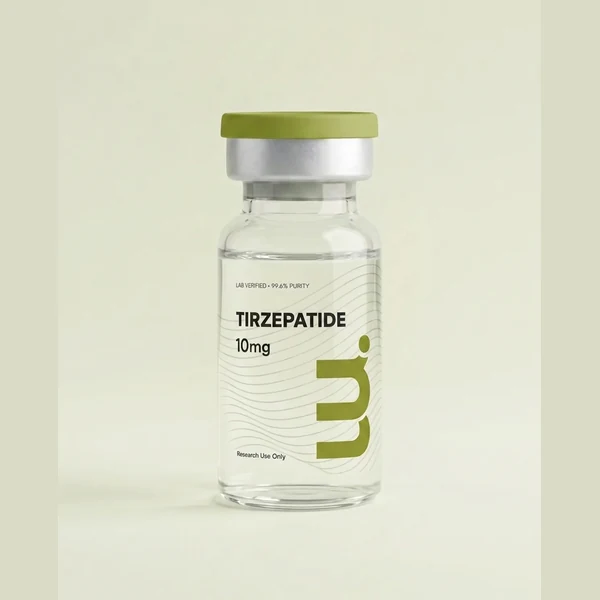
Tirzepatide 10mg
Dual GIP/GLP-1 receptor agonist peptide studied in metabolic and glucose-regulation research models.
€199.00
LEAN
Tirzepatide 10mg
Dual GIP/GLP-1 receptor agonist peptide studied in metabolic and glucose-regulation research models.
€199.00
-
 GLOW
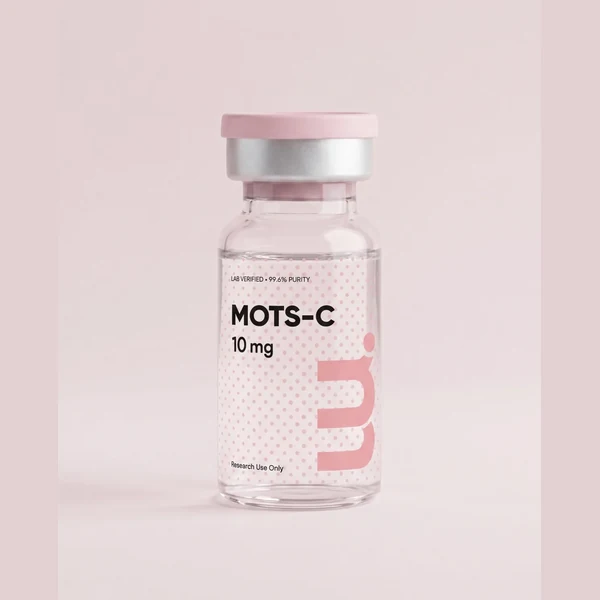
MOTS-c 10mg
Mitochondrial-derived peptide studied in research on metabolic regulation and exercise physiology in animal models.
€79.00
GLOW
MOTS-c 10mg
Mitochondrial-derived peptide studied in research on metabolic regulation and exercise physiology in animal models.
€79.00
-
 LEAN
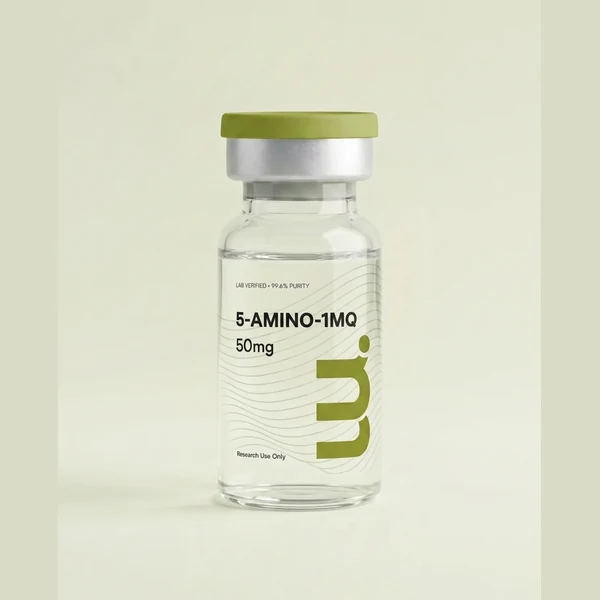
5-Amino-1MQ 50mg
Small-molecule NNMT inhibitor studied in research on adipocyte metabolism in preclinical models.
€119.00
LEAN
5-Amino-1MQ 50mg
Small-molecule NNMT inhibitor studied in research on adipocyte metabolism in preclinical models.
€119.00