FOCUS
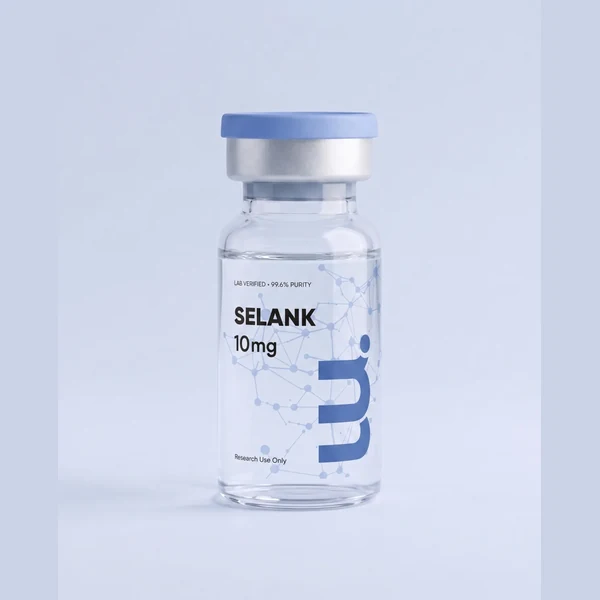
Selank 10mg
Selank
€85.00
Purity ≥99% · verified by HPLC and mass spectrometry
Order via TelegramIndependent HPLC and mass spectrometry report · 99.742% by HPLC · lot SLNK01122026-J.
Tracked shipping to the United Kingdom, Ireland and the rest of Europe · handling 0–1 days · 14-day right of withdrawal
Technical specification
| CAS number | 129954-34-3 |
|---|---|
| Sequence | Thr-Lys-Pro-Arg-Pro-Gly-Pro |
| Molecular formula | C33H57N11O9 |
| Molecular weight | 751.9 g/mol |
| Purity | ≥99% |
| Presentation | Lyophilised powder, single-use glass vial |
| Intended use | Laboratory research use only |
Selank is a synthetic heptapeptide (Thr-Lys-Pro-Arg-Pro-Gly-Pro) developed as an analogue of tuftsin, an endogenous immunomodulatory tetrapeptide. Like Semax, Selank carries the Pro-Gly-Pro extension originally used to improve peptide stability against enzymatic degradation, and the two compounds are frequently studied and compared within the same research programmes.
The published literature on Selank covers rodent models of anxiety-related behaviour, immune cell signalling and, more recently, gene expression studies examining monoamine and neurotrophic pathways. Selank is studied as a structurally related but pharmacologically distinct counterpart to Semax, with research typically framed around anxiolytic-type behavioural assays rather than the cognitive assays more commonly associated with Semax.
Research applications
- Rodent anxiety-related behavioural assays (elevated plus maze, open field)
- Immune cell signalling and tuftsin-pathway research
- Gene expression studies of monoamine and neurotrophic pathways
- Comparative structure-activity research alongside Semax
What the literature reports on Selank
Selank was developed as a stabilised analogue of tuftsin, a naturally occurring immunomodulatory peptide, using the same Pro-Gly-Pro stabilisation strategy applied to Semax. This shared design has made the two peptides a common comparative pair in the pharmacology literature, particularly in studies examining structure-activity relationships within short proline-containing peptides.
Behavioural pharmacology
Rodent studies using standard anxiety-related behavioural assays, including the elevated plus maze and open-field tests, have reported changes in exploratory and avoidance behaviour following Selank administration. This body of work is generally discussed in the literature alongside research into GABAergic and monoaminergic signalling pathways.
Immune and gene expression research
Because Selank derives from tuftsin, a peptide with documented roles in immune cell signalling, a portion of the research literature has examined its effects on cytokine expression and leukocyte activity in animal and in vitro models. Separately, gene expression studies have reported changes in the transcription of enzymes involved in monoamine metabolism, a line of research often cited alongside the behavioural pharmacology findings.
Comparative research with Semax
Because Selank and Semax share a design lineage but differ in their core sequence, researchers frequently study them side by side to separate sequence-specific effects from the shared Pro-Gly-Pro stabilisation motif. A detailed comparison of the published findings for both peptides is available in the Semax vs Selank guide, and the broader Semax literature is indexed on the Semax research pillar.
Stability and analytical research
As with Semax, a body of analytical chemistry literature has examined Selank's stability under various storage and reconstitution conditions, characterising degradation pathways relevant to laboratory handling. This research directly informs the recommended storage practice for lyophilised and reconstituted material, detailed further in the peptide reconstitution and storage guide.
Dose-response and pharmacokinetic research
Pharmacokinetic studies in animal models have characterised Selank's absorption and clearance profile following intranasal and parenteral routes of administration in the research literature, reporting a short plasma half-life consistent with other short, unmodified peptides. This pharmacokinetic profile is a recurring variable considered when researchers design dose-response protocols for behavioural and immunological assays involving Selank.
Laboratory handling
Each vial of lyophilised Selank should be stored at -20°C prior to reconstitution and protected from light and humidity. As with other short peptides in this catalogue, standard laboratory practice is to reconstitute with bacteriostatic water or sterile water for injection, introduced slowly along the vial wall rather than directly onto the lyophilised cake.
- Lyophilised powder: store at -20°C, protected from light, until reconstitution.
- Reconstitution: introduce diluent slowly along the vial wall; avoid vigorous shaking.
- Post-reconstitution: 2-8°C for short-term laboratory use; avoid repeated freeze-thaw cycles.
- Each batch ships with a certificate of analysis confirming ≥99% purity by HPLC and identity by mass spectrometry.
See the peptide reconstitution and storage guide for a full laboratory protocol reference. This product is intended for laboratory research use only.
References
- Zozulia AA, Neznamov GG, Siuniakov TS, Kost NV, Gabaeva MV, Sokolov OIu, Serebriakova EV, Siranchieva OA, Andriushenko AV, Telesheva ES, Siuniakov SA, Smulevich AB, Miasoedov NF, Seredenin SB. “Efficacy and possible mechanisms of action of a new peptide anxiolytic selank in the therapy of generalized anxiety disorders and neurasthenia”. Zhurnal Nevrologii i Psikhiatrii imeni S.S. Korsakova, 2008. PubMed
- Kasian A, Kolomin T, Andreeva L, Bondarenko E, Myasoedov N, Slominsky P, Shadrina M. “Peptide Selank Enhances the Effect of Diazepam in Reducing Anxiety in Unpredictable Chronic Mild Stress Conditions in Rats”. Behavioural Neurology, 2017. PubMed / DOI
- Inozemtseva LS, Karpenko EA, Dolotov OV, Levitskaya NG, Kamensky AA, Andreeva LA, Grivennikov IA. “Intranasal administration of the peptide Selank regulates BDNF expression in the rat hippocampus in vivo”. Doklady Biological Sciences, 2008. PubMed / DOI
Related compounds
-
 FOCUS
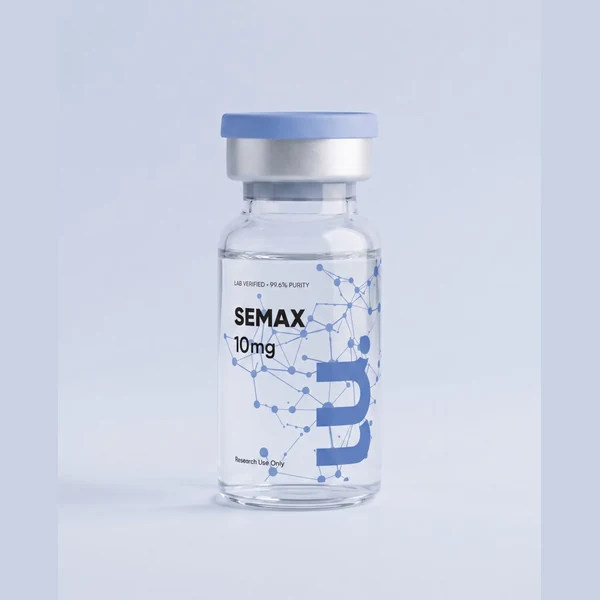
Semax 10mg
Synthetic ACTH(4-10) fragment analogue studied in preclinical models of memory, attention and neuroprotection.
€85.00
FOCUS
Semax 10mg
Synthetic ACTH(4-10) fragment analogue studied in preclinical models of memory, attention and neuroprotection.
€85.00
-
 GLOW
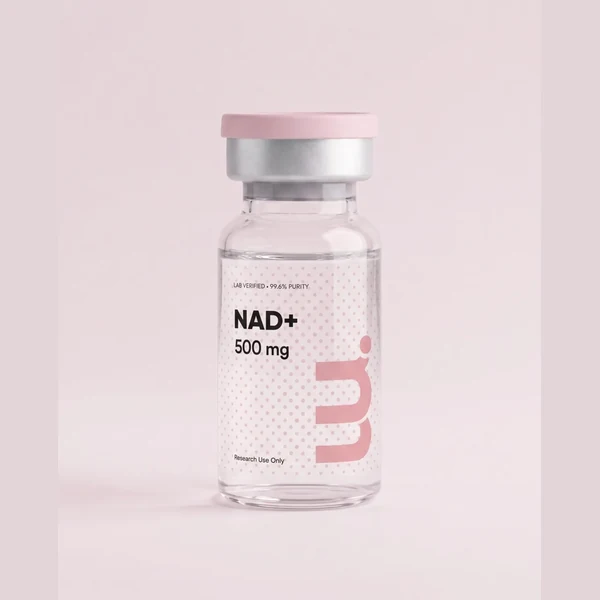
NAD+ 500mg
Coenzyme central to cellular energy metabolism, studied in research on mitochondrial function and cellular ageing.
€179.00
GLOW
NAD+ 500mg
Coenzyme central to cellular energy metabolism, studied in research on mitochondrial function and cellular ageing.
€179.00
-
 FOCUS
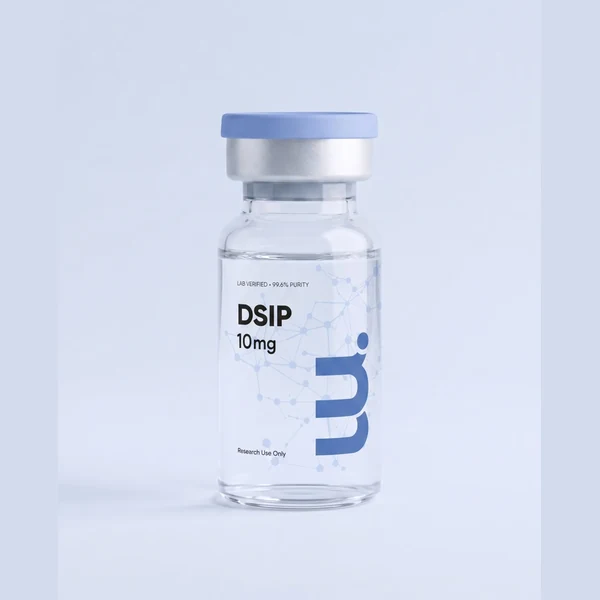
DSIP 10mg
Nonapeptide first isolated for its role in sleep research, studied in animal neurophysiology models.
€75.00
FOCUS
DSIP 10mg
Nonapeptide first isolated for its role in sleep research, studied in animal neurophysiology models.
€75.00