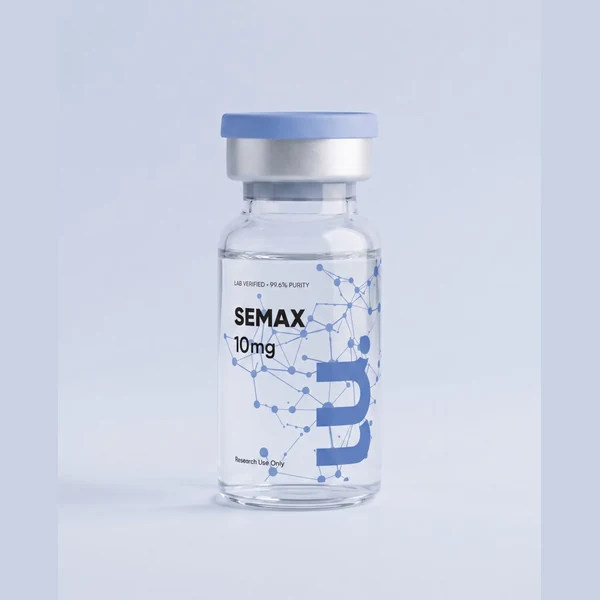
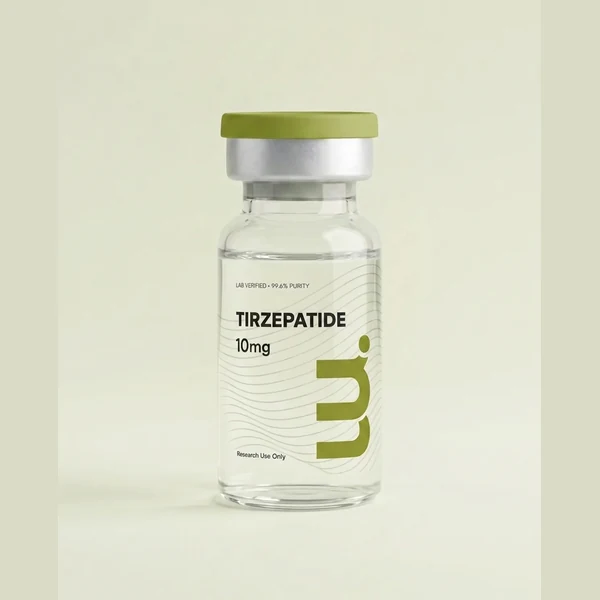
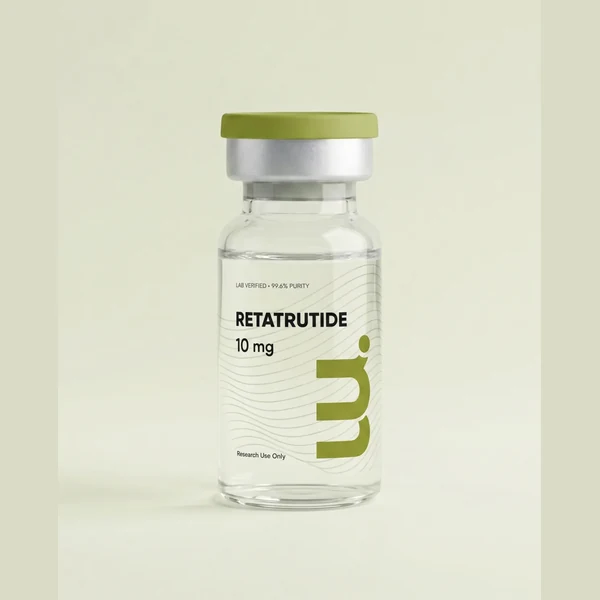
The fastest way to assess a research peptide listing is to check four things in order: whether a batch-specific certificate of analysis is available before purchase, whether that COA includes both HPLC and mass spectrometry data, whether the price is plausible given the cost of ≥99% purity synthesis at scale, and whether the listing describes a human dosing regimen rather than treating the product as a laboratory reagent. A listing that fails more than one of these should be treated as unverified. The same checklist applies whether the compound in question is Semax or any other item in a research catalogue.
Does the vendor publish a batch-specific COA?
As covered in how to read a peptide COA, a certificate of analysis is only meaningful when it is tied to the specific batch a customer receives. A common shortcut among lower-quality vendors is to publish a single, generic COA — sometimes not even for their own material, but copied from a manufacturer's marketing sample — and present it as representative of every order. If a vendor cannot show a batch number on the COA that matches a batch number on the vial label, the document is not verifying what actually ships.
Are the HPLC and mass spec data independent or self-reported?
Self-reported purity figures, generated by the seller's own equipment with no named testing laboratory, carry an obvious conflict of interest. The more reliable signal is testing performed by a laboratory with no commercial stake in the sale, and ideally one that can be identified by name. This distinction is discussed in more depth in what HPLC purity actually measures, but the practical checklist item is simple: look for a named, independent laboratory on the COA, not just a percentage.
Is the price consistent with the cost of ≥99% purity synthesis?
Solid-phase peptide synthesis at research-grade purity has a real cost floor driven by reagent cost, purification runs, and analytical testing, and that floor scales with peptide length and sequence complexity — which is one reason a longer compound such as tirzepatide or retatrutide costs meaningfully more to produce at verified purity than a short heptapeptide such as Semax. A listing priced well below the typical market range for a given sequence and purity level is a signal worth investigating rather than dismissing — either the purity claim is not verified as stated, or the material is not what the label describes.
Does the listing describe a human dosing regimen?
A vendor genuinely operating within a research use only framework markets the product as a laboratory reagent: it should reference purity, sequence, molecular weight, storage conditions and study protocols, not personal dosing schedules, expected outcomes, or before-and-after claims. A listing that frames the product primarily around self-directed human administration is operating outside the research use only category regardless of what its label says, and that mismatch between labelling and marketing is itself a quality signal about how carefully the rest of the listing was put together.
What does transparent sourcing look like?
Beyond the COA itself, transparent vendors are typically willing to disclose which laboratory performs testing, provide the underlying chromatogram and mass spectrum rather than a summary percentage alone, and maintain consistent batch documentation across repeat orders of the same product. The regulatory documentation that should accompany a legitimate order — a REACH-compliant safety data sheet and a matching certificate of analysis — is covered in buying research peptides in Europe.
What does a COA-level red flag checklist look like in practice?
A handful of specific, checkable details separate a credible COA from a weak one, and none require laboratory access to evaluate. A purity figure reported as an exact round number across every batch a vendor has ever sold, rather than varying slightly run to run as real chromatography data does, suggests the number may be a marketing figure rather than a measured one. A mass spectrometry result with no stated tolerance, or a tolerance wide enough to obscure a truncated sequence, weakens the identity confirmation even where the headline purity looks strong. A testing date that sits more than roughly twelve months before the order date raises the question of whether the batch on the COA is actually the batch being shipped. And a chromatogram presented as a stock image or template graphic, rather than a run specific to the batch in question, is one of the more direct signs that the documentation was not generated for that particular production run. These sit alongside the broader documentation checks covered in how to read a peptide COA.
| Signal | Lower-quality pattern | Higher-quality pattern |
|---|---|---|
| Purity figure | Identical round number across all batches | Batch-specific figure with visible variation |
| Testing laboratory | Unnamed or described only as "in-house" | Named, ideally independent of the seller |
| Pricing | Well below typical cost of verified synthesis | Consistent with published market range for the sequence |
| Product framing | Personal dosing schedules, outcome claims | Purity, sequence, storage and study-protocol language |
Why does sequence length change what a reasonable price looks like?
Solid-phase peptide synthesis cost scales with the number of coupling cycles required, which tracks fairly closely with sequence length, and it scales further with the purification effort needed to reach research-grade purity, since longer sequences generally produce more truncation and deletion by-products that must be separated out. A seven-residue compound such as Semax is comparatively inexpensive to synthesise at high purity relative to a longer, more structurally complex molecule like retatrutide, which carries a fatty-acid side chain and a considerably longer backbone. A listing that prices a long, structurally complex peptide at or below the price of a short heptapeptide, while both claim ≥99% purity, is describing an economically implausible outcome, and that implausibility is itself useful information when evaluating a vendor.
Cross-checking a listed price against the sequence length and reported purity, alongside the COA checklist above, takes only a few minutes and does not require any laboratory access — it is simply a matter of reading the specification sheet critically before placing an order, the same discipline that applies to reading a purity trace itself, covered in what HPLC purity actually measures.
None of the checks above requires specialised equipment; they require reading the documentation a vendor is willing to provide before purchase. Every compound in the SemaxBuy catalogue ships with a batch-specific COA covering both HPLC and mass spectrometry data, in keeping with the research use only framework this site operates under, and the guide to buying research Semax sets out the ordering process step by step.