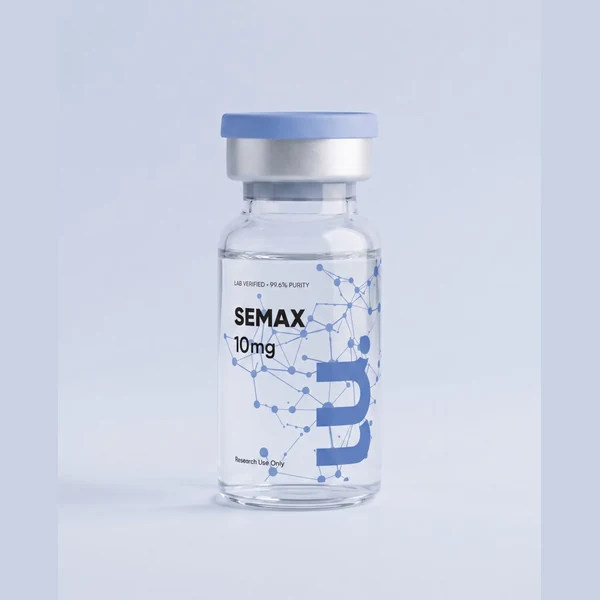
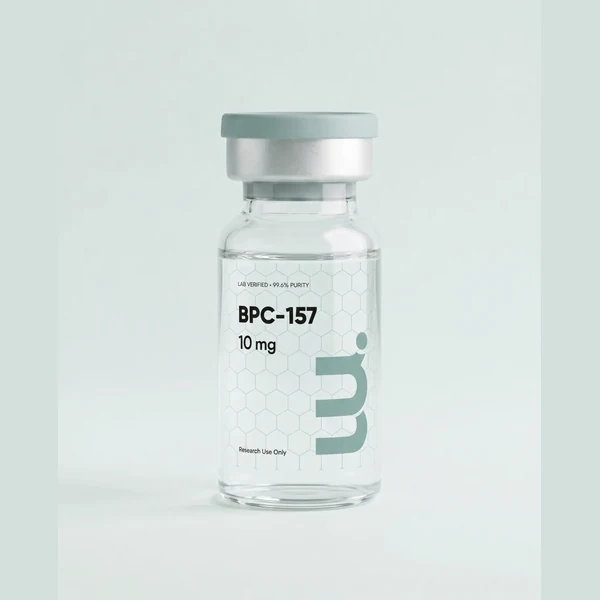
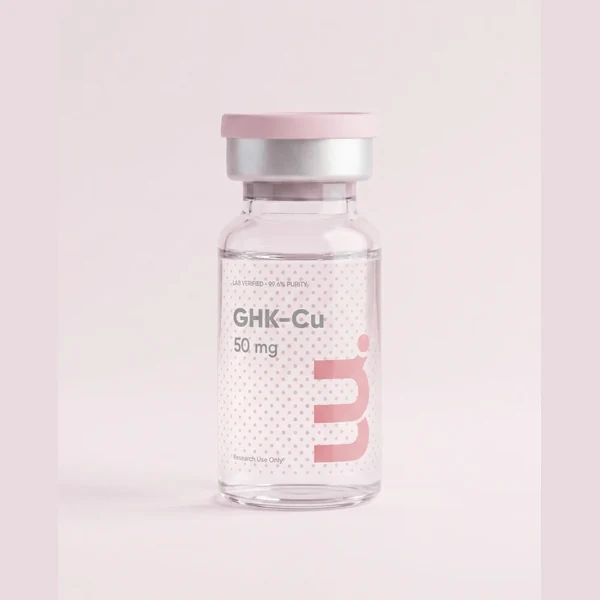
Lyophilised (freeze-dried) research peptides are stable for years when stored at ‒20°C or below, protected from light and moisture, while reconstituted peptide solutions are far less stable — typically usable for only days to a few weeks even under refrigeration, depending on the buffer and storage conditions used. That gap between the two states is the single most important fact for anyone handling research peptide material, because reconstitution is an irreversible shift from a stable to an unstable storage regime. This applies to the Semax reference compound as much as to any other peptide in the catalogue.
How should lyophilised peptide be stored?
In its freeze-dried, powder form, a peptide such as Semax or BPC-157 is chemically stable for extended periods because the degradation pathways that require water — hydrolysis chief among them — are largely halted in the absence of moisture. The literature and standard laboratory guidance converge on storing lyophilised peptide desiccated, protected from light, and at ‒20°C or colder; under those conditions, a sealed vial is commonly reported to remain within specification for two to five years or longer. Storage above freezing, in a standard refrigerator, is generally acceptable for shorter periods but is not equivalent to freezer storage for long-term stability.
What changes once a peptide is reconstituted?
Reconstitution reintroduces water into the peptide, and water reactivates the degradation pathways that lyophilisation suspends — hydrolysis of peptide bonds, oxidation of susceptible residues, and aggregation are all far more active in solution than in a dry powder. Once dissolved, most reconstituted research peptides are reported to remain within acceptable specification for only around five to seven days at refrigerator temperature, though some formulations using bacteriostatic diluent are reported to extend that window to roughly four weeks under refrigeration. This is a general pattern reported across the peptide-handling literature rather than a fixed rule for every sequence, and researchers should treat any specific timeframe as an estimate to be verified against their own stability testing where precision matters.
Why do freeze-thaw cycles matter?
Repeated freezing and thawing of a reconstituted peptide solution is reported to disrupt molecular structure through mechanical and concentration-gradient stress at the ice-liquid interface, which can degrade activity independent of overall storage time. Standard laboratory practice is to limit any given aliquot to three freeze-thaw cycles at most, and the more robust approach is to divide a reconstituted solution into single-use aliquots immediately after mixing, so that each aliquot is frozen once and thawed once before use. This is a straightforward procedural fix that removes the freeze-thaw variable from a study design entirely.
What role does light exposure play?
Certain amino acid residues, including tryptophan, tyrosine and methionine, are susceptible to photo-oxidation on prolonged exposure to light, particularly ultraviolet and blue-spectrum wavelengths. Semax contains a methionine residue at its N-terminus, which is one reason vials are supplied in amber or opaque packaging and should be stored away from direct light regardless of temperature. This applies to both the lyophilised and reconstituted states, though the practical risk is higher once dissolved, since degradation reactions in general proceed faster in solution.
How does storage interact with the COA purity figure?
A certificate of analysis documents the purity of a batch at the time of testing, not a permanent property of the vial — improper storage after that point can degrade a genuinely ≥99% pure batch well below its documented figure before it is ever used. This is why storage guidance and COA interpretation belong together: a vendor supplying accurate HPLC and mass spectrometry data, as discussed in how to read a peptide COA and what HPLC purity actually measures, is only reporting the state of the material at the point it left the laboratory. What happens chemically at each terminus of the peptide, including in modified variants, is covered further in Semax forms and variants.
Does the choice of reconstitution diluent affect stability?
Two diluents are commonly used to reconstitute lyophilised research peptides: sterile water, which is purified and filtered but contains no additives, and bacteriostatic water, which is sterile water with a small concentration (typically 0.9%) of benzyl alcohol added. The added benzyl alcohol slows the growth of bacteria that might otherwise be introduced during repeated withdrawal from a multi-use vial, which is why bacteriostatic water is generally preferred for solutions accessed more than once over several days. It is worth being precise about what that additive does and does not do: it reduces microbial contamination risk during handling, it does not slow the chemical degradation pathways — hydrolysis, oxidation, aggregation — that govern how long the peptide itself remains intact in solution. A solution reconstituted with bacteriostatic water can still lose potency on the same chemical timeline as one reconstituted with sterile water; the diluent addresses contamination risk, not peptide stability, and conflating the two is a common source of confusion in less careful storage guidance.
What table of reference storage windows do researchers commonly use?
| State | Recommended storage | Typical stability window |
|---|---|---|
| Lyophilised powder | ‒20°C or below, desiccated, dark | Two to five years or longer |
| Lyophilised powder, refrigerated | 2–8°C, desiccated, dark | Months, shorter than freezer storage |
| Reconstituted, sterile water | 2–8°C, single-use aliquots | Days, used promptly |
| Reconstituted, bacteriostatic water | 2–8°C | Up to roughly four weeks, contamination risk managed |
| Reconstituted, frozen aliquots | ‒20°C or ‒80°C, single-use | Weeks to months, avoiding freeze-thaw cycling |
These figures are reported ranges drawn from the general peptide-handling literature rather than a fixed specification for every sequence; a research programme working to tight tolerances should validate stability empirically for its specific compound, buffer and storage conditions rather than relying solely on general guidance of this kind.
How should storage practice be documented in a study protocol?
A methods section that reports how a compound was stored — lyophilised or reconstituted, at what temperature, for how long, and how many freeze-thaw cycles a given aliquot underwent before use — gives other researchers the information needed to judge whether degradation could plausibly account for part of a reported result. This level of detail is straightforward to log at the point of reconstitution and aliquoting, and it costs little relative to the value it adds when a study's findings are later compared against, or fail to replicate, other work using the same compound under different storage conditions.
Correct storage is a research use only handling practice intended to preserve a batch's documented purity for as long as possible during a study, not guidance for personal use. Full reconstitution and storage procedures for the SemaxBuy catalogue, including GHK-Cu and the rest of the range, are set out in the guide to peptide reconstitution and storage, and the full catalogue is available at the catalogue.