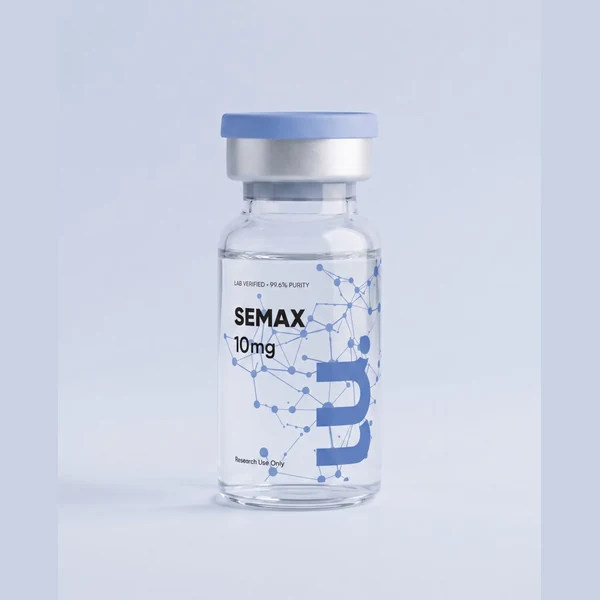
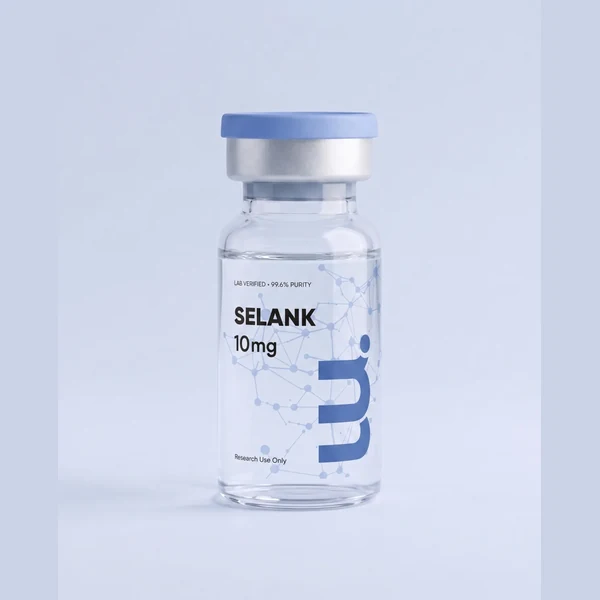
Semax, Selank, Noopept and Cerebrolysin are frequently grouped together as "nootropic-class" research compounds, but the published literature describes four structurally distinct substances with different reported mechanisms: Semax is linked primarily to neurotrophin gene expression, Selank to GABA-A receptor modulation, Noopept to a cycloprolylglycine metabolite acting on AMPA receptor signalling, and Cerebrolysin to a mixed peptide fraction derived from porcine brain tissue. Grouping them by informal category is useful for search purposes, but it obscures meaningful differences that matter for study design. Background on Semax specifically, including its structure and origin, is covered on the pillar page for the compound.
How does Semax's reported mechanism differ from Noopept's?
Structurally, the two compounds are not comparable: Semax is a heptapeptide (seven amino acids) derived from an ACTH fragment, while Noopept is a dipeptide-derived molecule that functions largely as a prodrug. The literature reports that Noopept is metabolised to cycloprolylglycine, a compound studied for AMPA receptor modulation and for activation of hypoxia-inducible factor 1 (HIF-1) signalling via PHD2 inhibition. Semax, by contrast, is reported to act primarily through changes in gene transcription — the literature describes altered expression of dozens of genes in rodent brain tissue, with the neurotrophin pathway (BDNF, NGF, TrkB) as the most consistently reported effect. A 2021 study in the Neurochemical Journal examined subchronic administration of both Noopept and Semax in BALB/c mice and reported that both were associated with increased density of cortical GABA-A receptors, suggesting some mechanistic overlap despite the different upstream pathways.
Where does Selank fit relative to Semax?
Selank shares the most structural similarity to Semax of any compound in this comparison: both are heptapeptides stabilised with the same Pro-Gly-Pro C-terminal tail, and both originate from the same Institute of Molecular Genetics research programme. The core sequence differs, though — Selank derives from tuftsin, an immunomodulatory tetrapeptide fragment of immunoglobulin G, rather than from ACTH. The reported receptor target also differs: Selank research centres on allosteric modulation of the GABA-A receptor, a mechanism more commonly associated with anxiolytic research, while the Semax literature centres on the neurotrophin pathway, more commonly associated with cognitive and neuroprotective research. A side-by-side structural and mechanistic comparison is available in the Semax vs Selank guide.
What about Cerebrolysin?
Cerebrolysin is a different category of research material altogether: rather than a single synthesised sequence, it is a mixture of low-molecular-weight peptide fragments and amino acids derived by enzymatic breakdown of porcine brain protein. Its composition is batch-dependent by nature, which makes it far harder to characterise analytically than a synthetic heptapeptide like Semax, where HPLC and mass spectrometry can confirm a single defined sequence against a reference standard. This is a structural point rather than a judgement about either compound's research value — it simply means the two are not directly comparable at the level of analytical verification, a topic covered in depth in how HPLC purity is measured.
Why are these compounds studied together?
Researchers group Semax, Selank, Noopept and Cerebrolysin together for practical reasons: all four have been studied for effects on learning, memory or stress-related behaviour in rodent models, all four originate from a research tradition centred on the former Soviet Union and Russia, and all four are commercially available as reference-grade research material with published COA and purity data. That shared context is useful for literature review purposes even though the underlying pharmacology differs substantially between them. A broader review of what the primary literature reports across the Semax evidence base specifically is available in the Semax research overview, and background on the compound's origin is covered in what Semax is.
What does this mean for compound selection in a study design?
For a researcher designing a comparative protocol, the practical implication is that "nootropic peptide" is not a single mechanistic category. A study comparing Semax against Noopept is, at the molecular level, comparing a gene-transcription-linked heptapeptide against a dipeptide-derived AMPA-pathway prodrug metabolite — a legitimate comparison, but one that should be framed around the specific endpoint under study (BDNF expression, GABA-A receptor density, behavioural task performance) rather than around the informal "nootropic" label. Reference literature for each compound, along with batch-specific COA data, is the more useful starting point than category labels.
Why does administration route complicate cross-compound comparison?
A further complication in comparing this group of compounds is that reported effects can depend heavily on how a compound is administered in a given study, not just on which compound is used. A comparative study in BALB/c and C57BL/6 mice examining Semax, Selank and Noopept together reported that the balance between nootropic-leaning and anxiolytic-leaning behavioural outcomes shifted depending on the administration route used for each compound, rather than remaining fixed to a single compound-specific profile. That finding is a useful caution against reading any single study's result as the definitive behavioural signature of a compound: route, strain, dose and timing are all variables that the literature shows can shift the reported outcome, and a rigorous comparative protocol needs to hold as many of those variables constant as possible across the compounds being tested.
How do these compounds compare on molecular size and analytical complexity?
Molecular size has direct practical consequences for how easily a compound's identity and purity can be verified. Semax and Selank are both seven-residue peptides with a defined, single sequence, which makes HPLC and mass spectrometry confirmation relatively straightforward: a COA can report one expected molecular weight and one expected retention time. Noopept's active circulating metabolite, cycloprolylglycine, is a small dipeptide-derived molecule, again analytically tractable by the same methods. Cerebrolysin, being a heterogeneous mixture of peptide fragments rather than a single defined sequence, cannot be verified the same way — there is no single molecular weight to confirm by mass spectrometry, and purity in the HPLC sense has a different meaning for a mixture than for a synthesised single sequence. This is a structural fact about the class of material, not a statement about which is more valuable for a given research question, and it explains why COA formats differ so much between vendors selling single-sequence peptides versus fraction-based products.
| Compound | Structure | Reported primary target | Research origin |
|---|---|---|---|
| Semax | Heptapeptide, ACTH(4-7)+PGP | Neurotrophin gene expression (BDNF/TrkB) | Institute of Molecular Genetics, USSR/Russia |
| Selank | Heptapeptide, tuftsin-derived+PGP | GABA-A allosteric modulation | Institute of Molecular Genetics, Russia |
| Noopept | Dipeptide-derived prodrug | AMPA/HIF-1 pathway via cycloprolylglycine | Russian Academy of Medical Sciences |
| Cerebrolysin | Heterogeneous peptide fraction | Mixed, batch-dependent | Porcine brain enzymatic hydrolysate |
As with all material on this site, everything above is a summary of published, peer-reviewed animal research and is intended for research use only. Semax, Selank and the rest of the verified peptide range are available in the catalogue with per-batch documentation.